

The 6 Signs a Pattaya Restaurant Is Actually a Local Spot (Not Staged for Tourists)
Look at three things before you sit down: whether any part of the menu is Thai-only, whether the restaurant is on Beach Road or Walking Street versus tucked into Naklua, Jomtien, Soi Yamoto, or Pratumnak Hill, and whether the crowd around you is mostly Thai families and office workers rather than tour groups. If a restaurant fails all three, it was built for tourists, not the neighborhood. If it passes two out of three, it's worth sitting down. This isn't a list of "best" restaurants that will be outdated in a year — it's a method you can apply anywhere in Pattaya for the rest of your trip.
Every travel blog covering Pattaya has a list of ten restaurants locals supposedly love. Half of them changed owners since the post was written, and the other half were never actually where Thai residents eat — they're just places with enough good reviews to rank. What actually holds up over time isn't a list of names. It's a set of signals you can check yourself, standing outside any restaurant in the city, in under sixty seconds.
Sign #1: Part of the Menu Is in Thai Only
This is the single strongest signal, and it's the one tourists never think to check. Restaurants that cater primarily to Thai customers often have a full English menu for foreign visitors, but a second, shorter list — handwritten on a whiteboard, taped to the wall, or printed only in Thai script — for dishes the kitchen assumes only Thai regulars will order. Jungle curry, certain organ-meat dishes, regional Isaan specialties, or a soup that changes based on what came in from the market that morning rarely make it onto the translated menu at all.
A frequently cited example from Bangkok review threads makes the pattern clear: diners at a well-regarded local lunch spot near Chit Lom noted the English menu was accurate but incomplete — the kitchen's actual best dishes were only listed in the Thai-language section, and regulars knew to ask staff directly rather than order from the translated page. The same pattern shows up constantly in Pattaya, especially around Soi Buakhao and Naklua, where restaurants serving a heavy expat and Thai-resident mix keep a English menu for convenience but never bother translating everything.
Zensseys Tip: If you can't read Thai, don't skip these restaurants — just point at what the table next to you is eating, or ask "Ah-rai a-roy?" (What's good here?) and let staff pick for you. It works more often than you'd expect, and kitchens genuinely light up when a foreign customer asks this instead of ordering pad Thai.
Sign #2: It's Not on Beach Road or Walking Street
Pattaya's central tourist strip — Beach Road and Walking Street specifically — is built almost entirely around foot traffic from hotels and bar-hopping tourists, and pricing reflects that. It's not that every restaurant there is bad; it's that the customer base skews so heavily toward one-time visitors that there's little pressure to keep prices or quality at neighborhood levels. The restaurants Pattaya residents actually eat at cluster in a handful of specific areas instead.
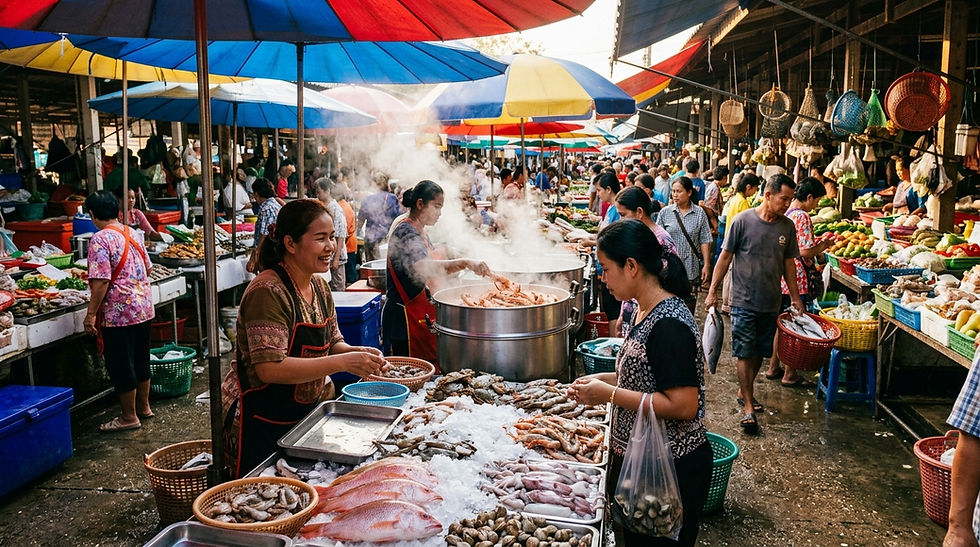
Naklua, north of the main tourist zone, is built around the Lan Pho Market fish trade — restaurants here buy from boats that unload within a few hundred meters, and pricing reflects a fishing-village economy rather than a resort one. Jomtien, particularly the southern end of Jomtien Beach Road near the morning market, draws a mix of Thai families and long-stay expats rather than package tourists. Soi Yamoto, tucked behind Soi Buakhao, is a cluster of unnamed noodle stalls with numbered stools that locals eat breakfast and lunch at daily. Bang Saray, a fishing town south of the city, and the small restaurants scattered around Pratumnak Hill round out the areas worth specifically seeking out.
Zensseys Tip: If a restaurant on Beach Road has a tout standing outside gesturing you in, that alone tells you what customer base it's built for. Genuinely local spots rarely need to pull people off the street — the regulars already know where to go.
Sign #3: No Laminated Photo Menu or Street Barker
Photo menus exist for a reason — they help tourists who can't read Thai or English order with confidence — but their presence is also a reliable marker of a restaurant built around first-time visitors rather than repeat local customers. A genuinely local noodle stall doesn't need photos of the food, because everyone walking in already knows what pad kra pao or boat noodles look like. The absence of a photo menu isn't proof of quality on its own, but combined with the other signs on this list, it's a meaningful data point.
The same logic applies to anyone stationed outside actively waving down passersby. Restaurants with a loyal local customer base fill up through word of mouth and routine, not through someone physically pulling tourists off the sidewalk. This is especially reliable within a block or two of Walking Street, where the barker-and-photo-menu combination is close to universal.
Sign #4: Cash Only, and the Prices Aren't Printed in Three Currencies
Restaurants built for Thai regulars are almost always cash-only, with prices listed in Thai baht and nothing else. The moment a menu shows prices in baht, dollars, and rubles side by side, or a QR code system pushes you toward card payment with a service charge attached, you're looking at a restaurant designed around international tourist convenience rather than a neighborhood habit. Neither approach is wrong, but they signal very different target customers.
Price itself is a useful secondary check. A bowl of boat noodles or a plate of pad kra pao at a genuinely local Pattaya spot typically runs 40–80 THB; if a similar-looking dish is priced at 150–250 THB with no obvious reason (better ingredients, a view, air conditioning), that's usually a tourist-strip markup rather than a quality difference.
Zensseys Tip: Bring smaller baht notes when you're testing out local noodle stalls and market stalls — many genuinely local vendors can't break a 1,000 baht note, which is worth remembering the same way it matters at Bangkok's prepaid food court cards. An anti-theft RFID crossbody bag is also worth carrying at cash-only markets like Naklua and Soi Yamoto, where you'll be pulling out small bills constantly.
Sign #5: The Crowd Skews Toward Breakfast and Lunch, Not Just Dinner
Tourist-oriented restaurants in Pattaya do the bulk of their business in the evening, timed around bar-hopping and dinner-after-the-beach crowds. Restaurants that serve the local population instead see a heavier morning and midday rush — Thai office workers grabbing a quick bowl of noodles before their shift, market vendors eating between deliveries, and families stopping in after a school run. If you walk past a place at 8 a.m. or noon and it's already busy with Thai customers eating quickly and leaving, that's one of the more reliable signals on this entire list, because it reflects a daily habit rather than a one-time tourist decision.
This is also why the Jomtien and Naklua morning markets are worth building into your schedule deliberately rather than treating Pattaya as strictly an evening food city. Grilled pork skewers, fresh tropical fruit, and pre-made curries sold by weight are typically gone or picked-over by early afternoon, well before the tourist dinner rush even starts. If you're planning on grazing your way through several stalls, a compact travel first aid kit is a reasonable thing to have on hand — not because street food is inherently risky, but because trying six new dishes in one morning is exactly the kind of adventurous eating where it's worth being prepared.
Sign #6: Google Reviews Are Mostly in Thai Script
Before you even walk in, pull up the restaurant on Google Maps and glance at the language mix in the reviews. A restaurant with hundreds of reviews almost entirely in Thai script, with only a handful in English, Russian, or Korean, is telling you plainly who actually eats there. This single check takes about ten seconds and is one of the easiest ways to pre-screen a restaurant before you've left your hotel room.
It's not a perfect signal on its own — some excellent local spots have picked up English-language attention from food bloggers in the last year or two — but paired with the menu-language and location checks above, it rounds out a method that's far more durable than any "best of" list, because it still works exactly the same way five years from now.
Where to Actually Test This Method in Pattaya
Naklua, anchored by the Lan Pho Market, is the strongest starting point for seafood — grilled catch bought directly off the boats that morning, at prices that reflect a fishing town rather than a resort strip. Jomtien's southern end, especially the morning market along Jomtien Beach Road, is worth an early visit specifically because so much of what's sold there disappears by early afternoon. Soi Yamoto, just behind Soi Buakhao, is easy to miss because the stalls have no signage — just numbered stools and laminated photos taped to a cart — but it's exactly the kind of place this entire framework is built to help you find. Bang Saray, a genuine fishing town a short drive south of central Pattaya, and the quieter restaurant cluster around Pratumnak Hill round out the areas worth deliberately seeking out over another meal on Beach Road.
For a broader sense of why Pratumnak and the areas south of central Pattaya feel calmer and more residential than the city's reputation suggests, it's worth reading how Jomtien Beach quietly outperforms the rest of the city — the same neighborhood dynamics that make it a better place to stay also make it a better place to eat. If you're staying near Pratumnak Hill anyway, it's a short trip down to the free viewpoint at Big Buddha Hill before or after a meal in the neighborhood.
What to Do Once You're Sitting Down
Passing the six signs above gets you into the right restaurant. What you order once you're there matters just as much, and this is where most travelers undercut themselves without realizing it. Kitchens in genuinely local restaurants routinely tone down spice and adjust flavor profiles by default for anyone who looks like a foreign tourist, on the assumption that's what's wanted — which means the dish you're served may taste noticeably different from what a Thai regular at the next table is eating, even if you ordered the identical item. If you actually want the same flavor Thai diners get, you generally have to say so.
Learning even a handful of Thai phrases changes this dynamic more than almost anything else you can do. The specific phrases that change how vendors, drivers, and restaurant staff treat you go well beyond basic pleasantries — they include the exact wording that signals you actually want the local version of a dish, not the tourist-adjusted one.
Verdict: The Method Outlasts Any List
Any specific restaurant recommendation has a shelf life — owners change, kitchens close, a place gets discovered by influencers and shifts its entire menu and pricing within a season. What doesn't expire is a way of reading a restaurant for yourself: check the menu for a Thai-only section, notice whether you're on the tourist strip or in Naklua, Jomtien, Soi Yamoto, Bang Saray, or Pratumnak, watch who's eating there and when, and glance at the review language before you commit. Apply that same method the next time you're planning a Bangkok or Krabi trip and it holds up just as well there. If you'd rather have a Pattaya food itinerary built around your actual travel dates and where you're staying, a Zensseys travel consultation can map out a realistic day-by-day plan instead of a generic list.
Frequently Asked Questions
Is it rude to point at another table's food instead of ordering from the menu?
No — this is a completely normal way to order in Thailand, especially at small local restaurants where staff may have limited English. Pointing and asking "That one, please" (or gesturing while saying "an-nee") is common practice and usually gets you exactly what you wanted rather than a guess based on a translated menu description.
Are the tourist-strip restaurants on Beach Road actually unsafe or lower quality?
Not necessarily unsafe — food safety standards don't generally differ by neighborhood in Pattaya. The difference is usually value and authenticity of flavor rather than hygiene: tourist-strip restaurants tend to charge resort-area prices and mellow the spice and seasoning for a broader international palate, not that the food is prepared less carefully.
Do I need to speak Thai to use this method?
No. Every sign on this list is something you can observe or check on your phone — menu language, neighborhood, review-language mix, and crowd timing — without speaking a word of Thai. Learning a few phrases helps you get a better meal once you're seated, but it isn't required to identify the restaurant in the first place.
What's the best time of day to test this in Naklua or Jomtien specifically?
Late morning through early afternoon, roughly 10 a.m. to 1 p.m., is when you'll see the clearest gap between local and tourist-oriented restaurants — that's when Thai office workers and market vendors are eating, and the tourist dinner crowd hasn't arrived yet. The Jomtien and Naklua morning markets are also often past their best selection by early afternoon, so earlier is generally better for those specifically.
Does this method work outside of Pattaya, like in Bangkok or Phuket?
Yes — the six signs aren't Pattaya-specific. The same framework (menu language, distance from the main tourist strip, crowd timing, review language, cash-only pricing, and absence of touts) applies just as well in Bangkok's Sukhumvit area or Phuket's Patong, though the specific neighborhoods to seek out will obviously differ.
About the Author: This guide was researched and written by the team at Zensseys, a luxury Southeast Asia travel advisory specializing in Thailand, Vietnam, and Indonesia. Learn more about William Harris, your travel agent, and browse the full Zensseys blog for more Thailand travel guides.




Comments