

Phi Phi Islands Travel Guide: Where to Go, What to Do, and Where to Stay

The Phi Phi Islands remain among Thailand’s most recognizable destinations, but enjoying them requires more planning than the postcard photographs suggest. The difference between an unforgettable island escape and a crowded, inconvenient trip often comes down to where you stay, when you visit, and how early you explore.
Maya Bay’s ongoing conservation measures are an important reminder that Phi Phi is not simply a beach resort—it is a fragile marine environment. Authorities have periodically closed Maya Bay during the southwest monsoon, historically around August and September, to support ecological recovery and protect visitors during rougher sea conditions. Travelers should confirm the current schedule before booking an excursion. (DIE WELT)
Are the Phi Phi Islands Worth Visiting?
Yes, the Phi Phi Islands are worth visiting for their dramatic limestone cliffs, turquoise lagoons, snorkeling, beaches, and boat excursions. However, they are best for travelers who plan around crowds and choose the right neighborhood. Stay at least two or three nights, begin excursions early, and avoid treating Phi Phi as only a rushed day trip.
Understanding the Phi Phi Islands
The Phi Phi archipelago lies in Thailand’s Andaman Sea, between Phuket and the mainland province of Krabi.
Although people commonly say “Phi Phi Island,” the destination is actually a group of islands. The two most important for visitors are:
Koh Phi Phi Don
Koh Phi Phi Don is the only permanently inhabited island in the group. This is where you will find:
Hotels and resorts
Restaurants and bars
Tonsai Pier
Beaches
Dive shops
Phi Phi Viewpoint
Most overnight accommodations
There are no regular cars on the island’s central tourist areas. Most visitors walk, while boats connect the more secluded beaches and resorts.

Koh Phi Phi Leh
Koh Phi Phi Leh is uninhabited and protected as part of Hat Noppharat Thara–Mu Ko Phi Phi National Park.
It contains many of the archipelago’s most famous natural attractions:
Maya Bay
Pileh Lagoon
Viking Cave
Loh Samah Bay
Towering limestone cliffs
Snorkeling areas
You visit Phi Phi Leh by organized excursion or private longtail boat rather than staying overnight.
When Is the Best Time to Visit the Phi Phi Islands?
The best overall time to visit the Phi Phi Islands is generally November through April, when the Andaman Sea is usually calmer and conditions are more favorable for boating, snorkeling, diving, and beach time. (Top Phuket Tours)
For the best balance of weather, cost, and crowds, consider:
•
Late November to early December
Late January
February
Early March
December through February generally offers the most dependable conditions, but it also brings higher accommodation prices and heavier demand.
Phi Phi Weather and Travel Seasons
Period | Typical conditions | Crowds | Prices | Best for |
November–February | Drier, calmer seas and pleasant beach weather | High | High | First-time visitors, snorkeling and boat tours |
March–April | Hotter, generally favorable sea conditions | Moderate to high | Moderate to high | Beach vacations and diving |
May–July | Increasing rain, humidity and changing seas | Lower | Lower | Flexible travelers seeking value |
August–September | Wetter with a greater chance of rough seas | Low | Lowest | Resort stays with flexible plans |
October | Transitional weather and occasional storms | Low to moderate | Moderate | Travelers comfortable with uncertainty |
Weather in the tropics is never completely predictable. A rainy-season visit does not guarantee nonstop rain, but rough water can lead to delayed, altered, or canceled excursions.
The Best Month for Most Travelers
February is arguably the best all-around month for Phi Phi.
It generally provides:
Favorable boating conditions
Good underwater visibility
Less intense heat than April
Lower rainfall risk than the monsoon months
Excellent beach conditions
The disadvantage is that February is popular, so the best rooms and private tours may sell out well in advance.
The Best Time for Lower Prices
May, June, September, and October can bring lower hotel prices, but the savings come with a trade-off.
Travelers should expect:
Greater weather uncertainty
Rougher crossings
Reduced visibility on some days
Possible tour cancellations
Periodic attraction closures
More humidity and rain
A low-season trip works best when you can keep your schedule flexible and would still enjoy the resort even if a boat excursion is canceled.
How Long Should You Stay on Phi Phi?
For most travelers, three to five nights is the ideal amount of time on Koh Phi Phi Don.
That gives you enough time to:
•
Explore Phi Phi Leh
Visit Maya Bay
See Pileh Lagoon
Hike to the viewpoint
Spend a relaxed day at the beach
Take a snorkeling or diving excursion
Enjoy the island after the daytime tour crowds leave
A full week can work well for divers, couples, beach lovers, and travelers staying at a secluded resort.
Two complete weeks solely on Phi Phi may feel repetitive for many people. A better two-week Thailand itinerary usually combines Phi Phi with Phuket, Krabi, Koh Lanta, or Bangkok.
How to Get to the Phi Phi Islands
There is no airport on Koh Phi Phi Don.
Most travelers arrive by ferry or speedboat from:
Phuket
Krabi
Koh Lanta
Occasionally other Andaman destinations through connecting services
From Phuket
Most Phuket departures leave from Rassada Pier and arrive at Tonsai Pier or, on selected services, Laem Tong.
Current published fares vary considerably by vessel and booking platform. Standard routes may begin around €14–€16 each way, while faster or premium services can cost considerably more. Travel time commonly ranges from approximately one to two hours depending on the vessel, sea conditions, and destination pier. (Ferryhopper)
From Krabi
Services commonly leave from Klong Jilad Pier and arrive at Tonsai Pier.
Krabi can be a convenient gateway when your itinerary also includes:
Railay Beach
Ao Nang
Krabi Town
Koh Lanta
Ferry or Speedboat?
Option | Advantages | Disadvantages | Best for |
Standard ferry | More stable, spacious and usually less expensive | Slower | Budget travelers and those prone to mild seasickness |
Speedboat | Faster and often offers more departure choices | Bumpier, louder and more weather-sensitive | Travelers prioritizing time |
Private transfer | Flexible and convenient | Expensive | Families, groups and luxury travelers |
Keep your passport information available when booking, and arrive at the pier earlier than the stated departure time.
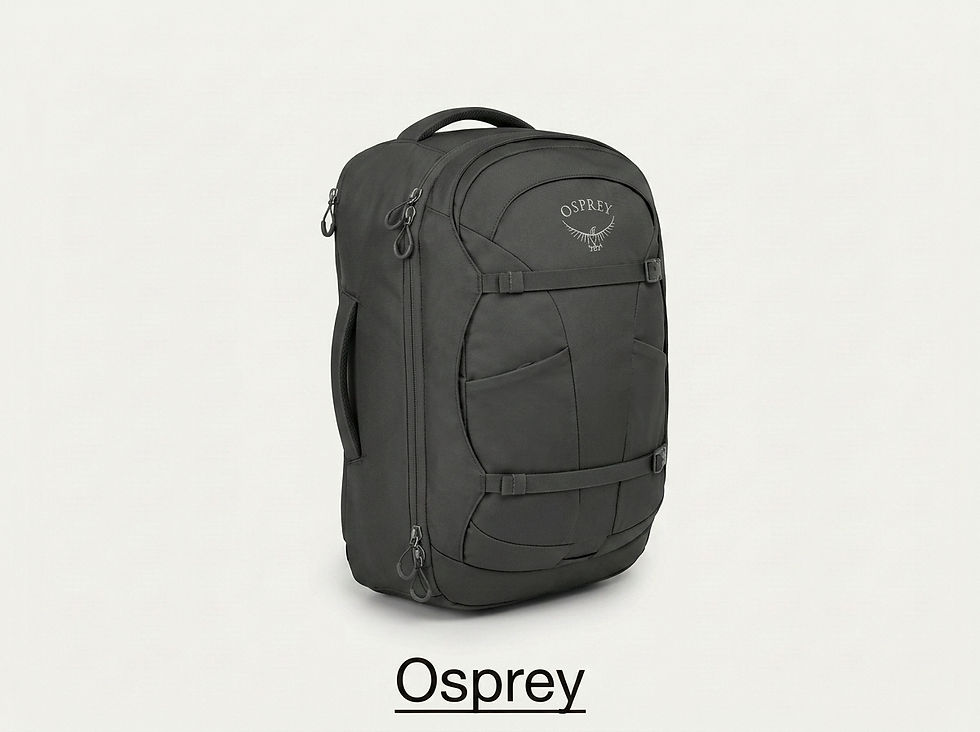
A water-resistant travel backpack is particularly useful because bags may be moved between piers, boats, beaches, and smaller transfer vessels.
Where to Stay on Koh Phi Phi Don
Choosing the right part of Phi Phi is more important than choosing the most attractive hotel photograph.
The island’s neighborhoods offer very different experiences.

Tonsai Village: Best for Convenience
Tonsai is the island’s transportation and commercial center.
Stay here when you want:
Easy access to Tonsai Pier
Numerous restaurants
Shops and tour offices
Walkability
Nightlife
Lower-cost rooms
However, central Tonsai may feel crowded and noisy, particularly near nightlife areas.
Best for: First-time visitors, backpackers, solo travelers, younger couples and short stays.
Think twice when: You want silence, privacy or a resort-centered honeymoon.
Loh Dalum Bay: Best for Nightlife
Loh Dalum lies on the opposite side of the narrow central isthmus from Tonsai Bay.
It is known for:
Beach bars
Music
Fire shows
Social hostels
Late-night activity
This area can be exciting for travelers who want an energetic atmosphere, but it is not the best option for light sleepers.
Best for: Social travelers and nightlife.
Think twice when: You are traveling with young children or want an early, peaceful night.

Long Beach: Best Balance of Beach and Accessibility
Long Beach offers one of the most attractive compromises on Phi Phi Don.
It provides:
A proper sandy beach
Views toward Phi Phi Leh
Better swimming than some central areas
A quieter setting
Reasonable access to Tonsai by boat or footpath
Long Beach is excellent for couples and travelers who want relaxation without being completely isolated.
Best for: Couples, beach lovers and relaxed first-time visitors.
Laem Tong Beach: Best for Seclusion and Resorts
Laem Tong is in northern Phi Phi Don and feels considerably more removed from Tonsai.
It is known for:
Resort-style accommodations
A peaceful beach
Less nightlife
A quieter, more romantic environment
Access primarily by boat
The isolation is part of its appeal, but it also means fewer independent restaurants and less spontaneous access to central Phi Phi.
Best for: Honeymoons, anniversaries, resort vacations and quiet luxury.
Think twice when: You want to walk to nightlife, numerous restaurants or the main village.
Loh Ba Kao Bay: Best for Quiet Comfort
Loh Ba Kao combines a scenic northern setting with access to a small local village behind the resort area.
It may suit travelers seeking:
Calm surroundings
A resort atmosphere
Local restaurants within reach
A less isolated feeling than some parts of Laem Tong
Best for: Couples, families and longer stays.
Where Should You Stay?
Area | Atmosphere | Access | Typical price level | Best for |
Tonsai Village | Busy and convenient | Excellent | Budget to midrange | Short stays and first visits |
Loh Dalum | Social and lively | Excellent | Budget to midrange | Nightlife |
Long Beach | Relaxed and scenic | Boat or walking path | Midrange to upscale | Couples and beach time |
Loh Ba Kao | Quiet and comfortable | Mostly boat-based | Midrange to luxury | Families and couples |
Laem Tong | Secluded and resort-focused | Boat-based | Upscale to luxury | Romance and relaxation |

Recommended Types of Accommodation
Rather than selecting solely by star rating, choose your property based on location, transfer arrangements, beach quality, and noise level.
Budget Stay
Look for:
A private room or reputable hostel near Tonsai
Air conditioning
Secure storage
Recent cleanliness reviews
A location away from the loudest beach bars
Budget rooms may be simple, and island accommodations can cost more than comparable mainland rooms because supplies must be transported by boat.
Midrange Stay
For the strongest balance, consider a well-reviewed property near:
Long Beach
The quieter edge of Tonsai
Loh Ba Kao
Prioritize:
Breakfast inclusion
Pier transfer information
Sea-view room orientation
Pool access
Reliable air conditioning
Luxury or Romantic Stay
Laem Tong and northern Phi Phi are usually the best match for a more refined resort experience.
Look for:
Private boat transfers
Beachfront access
Spa facilities
Breakfast packages
Ocean-view rooms
On-site dining
Excursion arrangements
A more expensive room can be worthwhile when you plan to spend substantial time at the property. It may be less valuable when you expect to be boating, diving, or exploring all day.
The Best Things to Do in the Phi Phi Islands
1. Visit Maya Bay
Maya Bay became internationally famous after appearing in the film The Beach, but its importance goes beyond Hollywood.
The bay is surrounded by enormous limestone cliffs and features pale sand, shallow turquoise water, and a protected ecosystem.
Today, visits are more controlled than they once were. Depending on current regulations:
Boats may enter from the Loh Samah side
Visitors may walk to Maya Bay
Swimming may be restricted
Time on the beach may be limited
National-park fees may apply
Seasonal closures may occur
Do not expect to swim freely in Maya Bay simply because older photographs show people in the water. Regulations are designed to protect recovering marine life and coral habitat.

How to Experience Maya Bay Better
Book an early-morning excursion or private longtail boat.
Arriving early does not guarantee an empty beach, but it can produce:
Cooler temperatures
Better photography conditions
Shorter entry lines
A less rushed experience
Fewer large group tours
2. Cruise Through Pileh Lagoon
Pileh Lagoon is one of Phi Phi Leh’s most visually impressive locations.
The emerald-turquoise water is enclosed by steep limestone walls, creating the feeling of entering a hidden natural chamber.
Depending on conditions and regulations, excursions may allow:
Swimming
Floating
Photography
Longtail-boat rides
Brief snorkeling nearby
Pileh Lagoon often becomes crowded during peak hours, so visit early.
3. See Viking Cave
Viking Cave is located on Phi Phi Leh and is normally viewed from the water because access is restricted.
The cave is known for:
Historic-looking wall markings
Swiftlet nests
Traditional bird’s-nest harvesting
A mysterious name and appearance
Many excursions pass the cave while traveling between Maya Bay, Pileh Lagoon, and other locations. Current tour information generally notes that visitors view it from outside rather than entering. (Phi Phi Island Tours)
4. Hike to Phi Phi Viewpoint
The Phi Phi Viewpoint offers the island’s signature panorama over Tonsai Bay and Loh Dalum Bay.
The hike involves stairs, inclines, heat, and an entrance charge, but the view is well worth the effort for most physically able visitors.
Go:
Early in the morning for cooler temperatures
Before sunset for golden light
With water and supportive shoes
With enough daylight for the return journey
Sunset can be beautiful, but the trail and viewpoints may become crowded.
5. Snorkel Around the Islands
Phi Phi’s clear-water reputation makes snorkeling one of its major attractions.
Common excursion areas may include:
Shark Point
Bamboo Island
Mosquito Island vicinity
Phi Phi Leh
Smaller bays around Phi Phi Don
Marine visibility changes with rain, tides, currents, and boat traffic. Dry-season conditions are generally more dependable, but no operator can guarantee perfect visibility.
6. Go Scuba Diving
Phi Phi is a strong option for certified divers and beginners interested in discovery dives.
Possible marine sightings include:
Reef sharks
Turtles
Moray eels
Schools of tropical fish
Soft corals
Occasional larger pelagic species
Select a reputable dive operator, ask about group size, and confirm whether marine-park fees and equipment are included.
7. Visit Bamboo Island
Bamboo Island is flatter and more open than the limestone scenery associated with Phi Phi Leh.
Its appeal comes from:
Pale sand
Clear shallow water
Snorkeling
A classic tropical-island atmosphere
It is often included in full-day boat excursions and may fall within the national park’s fee area.
8. Spend Time on Long Beach
You do not need a packed excursion schedule every day.
Long Beach is a good place to:
Swim
Sunbathe
Read
Watch longtail boats
Enjoy a slower afternoon
See Phi Phi Leh in the distance
The beach can be reached by walking route or longtail boat, depending on your starting point and conditions.
9. Take a Private Longtail-Boat Tour
A private longtail excursion can be one of the best investments on Phi Phi.
It gives you greater control over:
Departure time
Route
Swimming stops
Photography
Time spent at each location
Avoiding some peak crowds
It costs more than joining a shared boat, but groups and couples may find the flexibility worthwhile.
Clarify before departing:
Total duration
Fuel inclusion
Snorkeling equipment
Life jackets
National-park fees
Drinking water
Exact destinations
Weather cancellation terms

A Sample Four-Day Phi Phi Itinerary
Day 1: Arrival and Island Orientation
Arrive at Tonsai Pier, transfer to your accommodation, and avoid scheduling a major boat tour immediately after your ferry.
Spend the afternoon:
Exploring the village
Relaxing at your beach
Confirming the next morning’s tour
Watching sunset
Day 2: Phi Phi Leh and Maya Bay
Leave early for:
Maya Bay
Pileh Lagoon
Viking Cave
Loh Samah Bay
Snorkeling
Return by mid-afternoon and keep the evening relaxed.
Day 3: Viewpoint and Long Beach
Hike to Phi Phi Viewpoint early.
Afterward:
Have breakfast or brunch
Take a longtail boat to Long Beach
Swim and relax
Return before dark
Day 4: Bamboo Island or Diving
Choose between:
A snorkeling excursion
Bamboo Island
Scuba diving
A resort day
Travel onward the next morning rather than booking a tightly timed flight immediately after your ferry.
What Does a One-Week Phi Phi Trip Cost?
The cost depends heavily on whether the week means seven nights entirely on Phi Phi or a wider Phuket–Phi Phi vacation.
The estimates below are per person, based on two people sharing a room. They include accommodation, local meals, shared room costs, island transportation, and typical activities. They do not include international airfare to Thailand.
Estimated One-Week Cost Per Person
Travel style | Accommodation | Food | Ferries/local transport | Activities | Estimated total |
Budget | $175–$350 | $140–$245 | $50–$100 | $100–$200 | $465–$895 |
Comfortable midrange | $420–$840 | $245–$420 | $75–$150 | $200–$400 | $940–$1,810 |
Upscale | $875–$1,750 | $420–$700 | $150–$300 | $350–$750 | $1,795–$3,500 |
Estimated One-Week Cost for Two Travelers
Travel style | Approximate total for two |
Budget | $930–$1,790 |
Comfortable midrange | $1,880–$3,620 |
Upscale | $3,590–$7,000 |
These estimates can rise during Christmas, New Year, Lunar New Year, and other high-demand periods.
They may also exclude:
Alcohol
Shopping
Travel insurance
International airfare
Domestic flights
Airport hotels
Private transfers
Extensive scuba diving
Premium holiday surcharges
What Does a Two-Week Phi Phi and Southern Thailand Trip Cost?
For most travelers, a two-week trip should not mean fourteen nights exclusively on Koh Phi Phi.
A more varied itinerary could include:
Three to five nights on Phi Phi
Three or four nights in Krabi
Three or four nights in Phuket
Additional time in Koh Lanta or Bangkok
Estimated Two-Week Cost Per Person
Travel style | Accommodation | Food | Transportation | Activities | Estimated total |
Budget | $350–$700 | $280–$490 | $125–$250 | $200–$400 | $955–$1,840 |
Comfortable midrange | $840–$1,680 | $490–$840 | $200–$400 | $400–$800 | $1,930–$3,720 |
Upscale | $1,750–$3,500 | $840–$1,400 | $350–$700 | $700–$1,500 | $3,640–$7,100 |
Estimated Two-Week Cost for Two Travelers
Travel style | Approximate total for two |
Budget | $1,910–$3,680 |
Comfortable midrange | $3,860–$7,440 |
Upscale | $7,280–$14,200 |
International flights from the United States can add a substantial amount to these totals. Airfare varies too widely by departure airport, season, route, and booking window to include responsibly in one fixed estimate.
Typical Daily Costs on Phi Phi
Expense | Budget range | Comfortable range | Upscale range |
Room for two | $50–$100 | $120–$240 | $250–$500+ |
Meals per person | $20–$35 | $35–$60 | $60–$100+ |
Shared boat excursion | $30–$75 | $60–$120 | — |
Private boat excursion | — | $100–$250 per boat | $250+ |
Local longtail transfer | $5–$25 | $15–$50 | Private arrangements |
Viewpoint/ minor fees | $1–$10 | $1–$10 | $1–$10 |
Treat these as planning ranges, not guaranteed prices. Island costs fluctuate with season, availability, fuel prices, weather, and booking timing.
The national-park fee associated with Phi Phi excursions has commonly been listed around 400 Thai baht for a foreign adult and 200 baht for a child, but fees and collection systems can change. Some excursions include the fee while others require separate payment, so confirm before booking. (GetYourGuide)
How to Save Money on Phi Phi
Stay Near Tonsai—but Not Directly Beside the Nightlife
You can access inexpensive food, tours, and transportation without paying for repeated boat transfers.
Check the map and recent noise reviews before booking.
Compare Tour Inclusions
The cheapest advertised excursion may exclude:
National-park fees
Pier transfers
snorkeling equipment
meals
towels
photography
hotel pickup
Compare the final cost rather than the headline price.
Travel in Shoulder Season
Late November, early December, March, and parts of May can offer better value than the Christmas and New Year peak.
Carry Cash
Cards are accepted at many hotels and established businesses, but small vendors, boats, fees, and local restaurants may require cash.
ATMs are available, although withdrawal and foreign-bank fees can add up.
Bring Refillable Water and Basic Supplies
Island convenience stores may charge more than mainland shops.
Bringing sunscreen, medication, charging cables, and basic toiletries from Phuket or Krabi can save money.
A Legend Hidden Inside Viking Cave
The Phi Phi Islands do not have one universally documented origin legend comparable to the best-known myths of some ancient cities. However, Viking Cave carries a mixture of history, mystery, and local storytelling.
The cave received its modern name from paintings inside that resemble sailing vessels. Some observers interpreted the drawings as Viking-style ships, although they are also described as representing junks or other older boats.
That uncertainty produced the enduring image of sailors sheltering inside the cave during dangerous Andaman storms.
One version of the story imagines ancient mariners taking refuge beneath the cliffs, leaving drawings behind as evidence of their passage. Over generations, the cave’s darkness, restricted access, and hidden chambers encouraged stories of distant sailors, spirits, and guardians of the sea.
Local tales reported by travelers have even described the cave as a place inhabited or guarded by fierce, mysterious figures who did not welcome intruders. Such accounts should be treated as folklore rather than verified history, but they contribute to the atmosphere surrounding the cave. (Deer is Travelling)
The cave also has a real cultural association with edible swiftlet nests, which have long been collected for bird’s-nest soup.
Workers traditionally protected and harvested these valuable nests, adding another layer to the cave’s guarded reputation. From a boat offshore, the cave can therefore feel like several stories overlapping at once:
A shelter for ancient sailors
A canvas of unexplained ship drawings
A protected source of valuable bird nests
A place watched over by unseen guardians
A reminder that some parts of Phi Phi remain inaccessible
Whether the ships belonged to merchants, fishermen, or travelers sheltering from storms, the drawings give Phi Phi Leh something rare: a human mystery hidden within a landscape usually celebrated only for its beaches.
What Most Travelers Don’t Know
Phi Phi Is Much Better After the Day-Trippers Leave
Between late morning and mid-afternoon, boat tours arrive from Phuket and Krabi.
When those visitors depart, overnight guests can experience:
Quieter lanes
More relaxed beaches
Sunset
Early-morning excursions
A less hurried atmosphere
This is one of the strongest reasons to stay overnight rather than take only a day trip.
•
Your Hotel Location Can Add Transportation Costs
A remote resort may require:
Resort boat transfers
Scheduled transfer times
Private longtail rides
Additional costs for evening trips to Tonsai
A lower room rate is not always cheaper once boat transfers are included.
Phi Phi Is Not Entirely a Quiet Paradise
Central Phi Phi can be busy, noisy, and commercial.
Visitors expecting an untouched island may be disappointed by:
Crowds
Boat traffic
nightlife
construction
narrow, busy walking areas
The peaceful version of Phi Phi still exists, but you must choose Long Beach, Loh Ba Kao, Laem Tong, or another quieter area.
Sea Conditions Control Your Schedule
Even during favorable months, wind and waves can affect:
Ferries
Speedboats
snorkeling
diving
Maya Bay access
private tours
Do not schedule a same-day ferry connection immediately before an important international flight.
The Sun Is Stronger Than It Feels
Boat wind and swimming can disguise sun exposure.
Use:
Reef-conscious sunscreen where available
A hat
UV-protective clothing
Drinking water
Shade breaks
Practical Packing List
For Phi Phi, pack lighter than you would for a conventional city vacation.
Recommended items include:
Lightweight clothing
Swimsuits
Sandals
Supportive shoes for the viewpoint
Dry bag
Reusable water bottle
Hat
Sunscreen
Insect repellent
Motion-sickness medication
Waterproof phone pouch
Small first-aid kit
Power bank
Copies of travel documents
A set of compression packing cubes can make ferry travel easier by keeping swimwear, evening clothing, and damp items separate inside your bag.
A portable power bank is also useful during all-day boat tours, especially when your phone serves as your camera, map, ticket wallet, and communication device.
Safety Considerations
Phi Phi is widely visited, but island travel introduces specific risks.
Boat Safety
Use established operators and confirm that life jackets are provided.
During bad weather, do not pressure a captain to continue simply because you have limited vacation time.
Swimming and Snorkeling
Pay attention to:
Currents
boat lanes
coral
sea urchins
guide instructions
designated swimming areas
Never stand on coral.
Alcohol and Water Activities
Avoid swimming, boating, or climbing after heavy drinking.
Nightlife areas can become crowded, so watch your drink and remain aware of your surroundings.
Medical Care
Basic care is available on Phi Phi, but serious medical situations may require transport to Phuket or Krabi.
Travel insurance with medical evacuation coverage is worth considering.
Local Etiquette and Responsible Travel
The Phi Phi Islands have experienced significant pressure from tourism. Maya Bay’s closures and visitor restrictions were introduced after severe environmental damage, and conservation measures have helped marine life begin returning. (TIME)
Travel responsibly by:
Avoiding single-use plastics
Never touching coral
Following Maya Bay rules
Not feeding wildlife
Bringing rubbish back from remote beaches
Using refillable water bottles
Choosing responsible tour operators
Respecting restricted areas
Wearing appropriate clothing away from the beach
Thai culture remains relatively modest. Swimwear is suitable on beaches and boats, but cover up when walking through villages, entering businesses, or traveling through mainland areas.
Is Phi Phi Actually Worth It?
The Advantages
Extraordinary limestone scenery
World-famous bays and lagoons
Strong snorkeling and diving
Multiple accommodation styles
Easy access from Phuket and Krabi
No need for a vehicle
Excellent photography
Energetic nightlife and quiet resorts on the same island
The Disadvantages
Heavy daytime crowds
Higher prices than some mainland destinations
Boat dependence
Noise in central areas
Weather-related disruptions
Environmental pressure
Limited roads and medical infrastructure
Some attractions can feel rushed during peak hours
Who Should Visit?
Phi Phi is an excellent match for:
First-time Thailand visitors
Couples
Divers
Snorkelers
Photographers
Beach lovers
Social solo travelers
Travelers comfortable using boats
Who Might Prefer Somewhere Else?
Consider Koh Lanta, Koh Yao Noi, or a quieter Krabi beach when you prioritize:
Minimal crowds
Road access
Long peaceful drives
A broad local community
Less nightlife
Lower-cost extended stays
The Honest Recommendation
Phi Phi is worth visiting, but do not approach it as a fantasy island with no crowds or development.
Stay at least two or three nights, select your neighborhood carefully, and explore Phi Phi Leh early in the morning. That approach allows you to see why the islands became famous without spending your entire visit surrounded by peak-hour tour traffic.
Frequently Asked Questions
Is Phi Phi better from Phuket or Krabi?
Both are practical gateways. Phuket usually provides a wider selection of international flights and tourist services, while Krabi works especially well when combining Phi Phi with Ao Nang, Railay, or Koh Lanta.
Can you stay on Maya Bay?
No. Maya Bay is on uninhabited Phi Phi Leh. Overnight accommodations are on Phi Phi Don.
How many nights are enough on Phi Phi?
Three nights is a good minimum for most first-time visitors. Four or five nights provides a more relaxed balance of excursions and beach time.
Do you need cash on Phi Phi?
Yes. Although many hotels and restaurants accept cards, cash remains useful for boats, small restaurants, fees, markets, and tips.
Is Phi Phi family-friendly?
It can be, particularly around Long Beach, Loh Ba Kao, and resort areas in northern Phi Phi Don. Families should avoid accommodations near the loudest Loh Dalum nightlife unless that atmosphere is intentional.
Is one week too long on Phi Phi?
Not for divers, honeymooners, or travelers who enjoy slow beach vacations. For travelers seeking variety, three to five nights on Phi Phi followed by Krabi, Phuket, or Koh Lanta is usually better.
The Zensseys Recommendation
For a first Phi Phi vacation, Zensseys recommends spending three to five nights on Koh Phi Phi Don, preferably at Long Beach for a balance of scenery and access or Laem Tong for a quieter resort experience.
Schedule your Phi Phi Leh excursion for your first available full morning. That leaves another day as a weather backup and prevents you from missing Maya Bay or Pileh Lagoon if conditions change.
A well-designed southern Thailand itinerary could combine:
Three or four nights on Phi Phi
Three nights in Krabi
Three or four nights in Phuket
Optional additional nights in Bangkok or Koh Lanta
Travelers who want help comparing resorts, arranging island transfers, building a personalized itinerary, or selecting the right excursions can work with Zensseys through Travel Consultations, Personalized Itineraries, Curated Travel Deals, and ongoing travel-advisor support.
Travel More, Discover More.




Comments