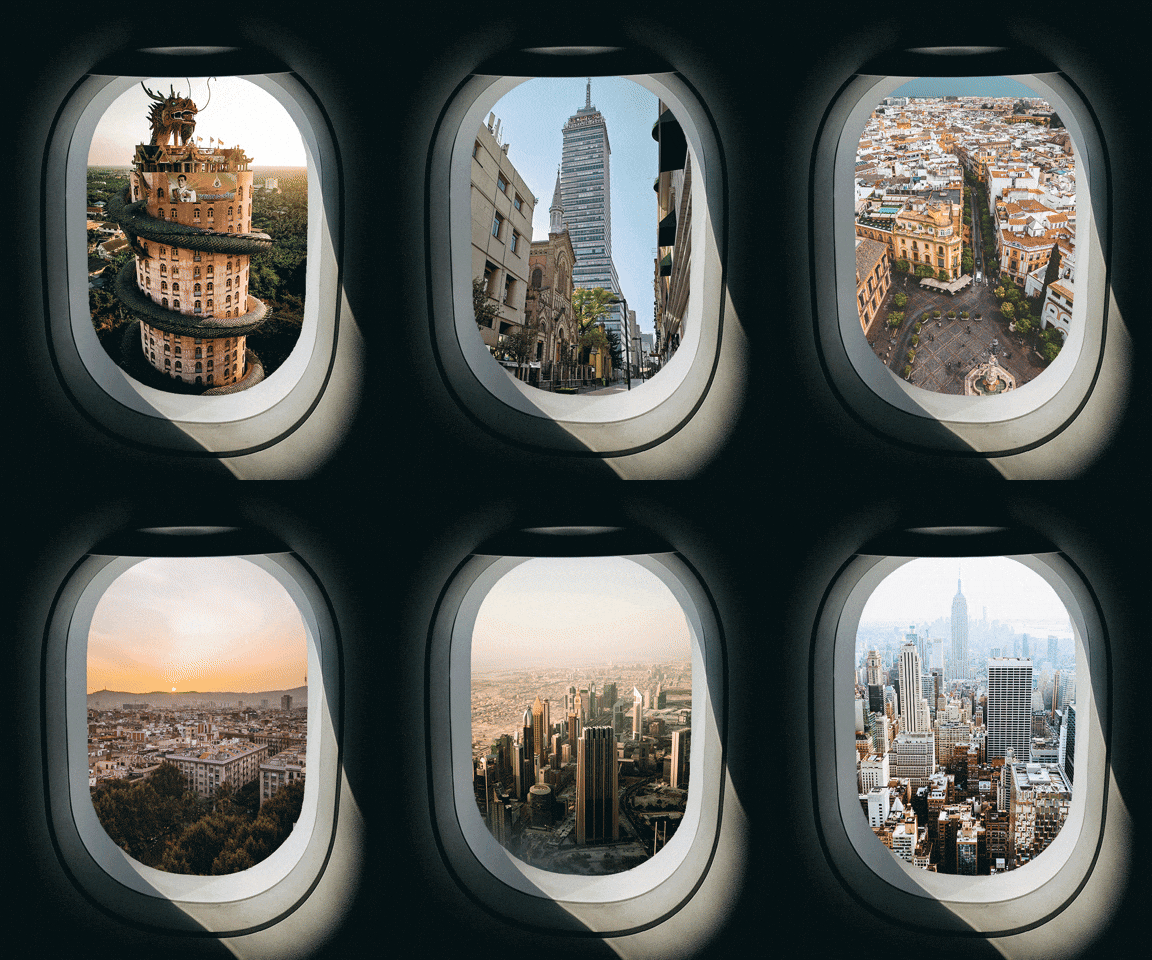


Naga or Dragon? Thailand Actually Has Two Completely Different "Dragon" Traditions

The Short Answer
Thailand actually has two completely separate "dragon" traditions, and most travelers conflate them. The Naga is Thailand's real dragon-adjacent creature — a serpent deity borrowed from Hindu and Buddhist mythology, carved into nearly every temple staircase and roof in the country, and officially named a Thai national symbol in 2022. The Chinese dragon (mangkorn) is a separate, later import tied to Thailand's large Chinese-Thai community, showing up in dragon dances, Chinatown temples, and Lunar New Year parades. They look similar to an untrained eye but come from entirely different belief systems, appear in different festivals, and mean different things.
Here's how to tell them apart, the festivals built around each one, the specific ornament types worth learning to spot, and where to find genuine dragon and naga souvenirs instead of generic tourist-shop versions.
Naga: Thailand's Real Dragon (a Hindu-Buddhist Serpent Deity)
The Naga is a multi-headed serpent deity Thailand absorbed from Indian mythology, not from China, and it's the closest thing the country has to its own dragon. In 2022, Thailand's Cabinet officially elevated the Naga to national-symbol status, in part to boost the country's cultural soft power. Thai belief holds there are four royal naga families, each identified by color: the golden Virupakkhas, green Erapatha, rainbow-colored Chabbyaputtas, and black Kanhagotamakas. It's the same folklore family that shows up throughout Thailand's ghost stories and superstitions travelers rarely hear explained.
The Naga is considered a protector of Buddhism, a guardian of water and fertility, and a bridge between the earthly and spiritual worlds. That's why it's carved into temple staircases as long, sinuous balustrades — walking up between two naga bodies is meant to symbolize passing from the ordinary world into sacred space. You'll also see the Naga in roof ornaments called nak sadung (the curved finial pieces that trace the roofline) and nak than (naga-shaped corbels supporting the eaves), both distinct architectural terms most guidebooks never explain.
Zensseys Tip: Count the heads. Naga statues at temple entrances are almost always odd numbers — one, three, five, seven, or nine heads — and the number isn't random decoration; more heads generally signal a more powerful or significant naga in that temple's specific story.
The Naga Fireball Festival: Where the Myth Becomes a Real Event
Every October, at the end of Buddhist Lent (Ok Phansa), thousands of people line a roughly 250-kilometer stretch of the Mekong River in Nong Khai province for Bang Fai Phaya Nak, the Naga Fireball Festival. Reddish glowing orbs rise from the river and disappear a few seconds later, and local belief attributes them to the Phaya Nak, a giant serpent said to live in the river, marking the end of the rains retreat. Scientists have proposed methane or phosphine gas as the mechanism; nobody's settled it definitively, and that unresolved mystery is a big part of why the festival draws crowds every year.
The festival itself has grown well beyond just watching the river — expect illuminated boat parades, food fairs, rowing contests, and a temple built specifically around the legend: Wat Thai's Phaya Naga Cave, constructed in the early 2000s to honor the serpent king. The best viewing points are around Phon Phisai district, and the exact dates shift with the lunar calendar, so confirm them close to your travel dates rather than assuming a fixed October date. If temple-hopping is part of your plan either way, the Erawan Museum's three-headed elephant makes a strong companion stop for the same trip.

The Chinese Dragon: A Completely Separate Tradition in Yaowarat
Thailand's Chinese dragon has nothing to do with the Naga's Hindu-Buddhist lineage — it arrived with Chinese immigration and is tied specifically to Thailand's Chinese-Thai community, most visibly in Bangkok's Chinatown, Yaowarat. Wat Mangkon Kamalawat, a major Chinese Buddhist-Taoist temple on Charoen Krung Road, is the anchor of Chinese dragon symbolism in the city, with dragon and lion motifs worked into its gates, pillars, and roofline in a completely different visual style than a Thai Buddhist wat — a useful contrast if you've also visited a multi-faith complex like Wat Yan Sangwararam near Pattaya.
The dragon comes to life every Lunar New Year, when Yaowarat fills with dragon parades, lion dances, and firecrackers meant to drive away evil spirits — a 100-foot dragon costume snaking through the crowd, worked by dozens of performers, is the signature image of the whole celebration. One honest caveat worth knowing before you plan a trip around it: Yaowarat's usual flagship street event has shifted to other venues in some recent years, so confirm the current year's main location before building an itinerary entirely around Chinatown itself.
Zensseys Tip: If you can't make Lunar New Year, Wat Mangkon Kamalawat's dragon and lion carvings are worth seeing on any regular day — you'll have the temple mostly to yourself instead of sharing it with the New Year crowds.
Ornaments and Symbols to Look For
Once you know what you're looking at, both traditions become much easier to spot across Thailand:
Naga balustrades: long serpent bodies flanking temple staircases, guiding visitors from earthly ground into sacred space
Nak sadung: the curved naga-head roof finials that trace a Thai temple's rooftop silhouette
Nak than: naga-shaped corbels supporting temple eaves, easy to miss if you're only looking at the roofline
Color coding: gold, green, rainbow, and black naga imagery references the four royal naga families rather than being decorative choice alone
Chinese dragon motifs: scaled, four-legged, clawed dragons worked into temple gates, red lanterns, and parade costumes around Yaowarat, visually distinct from the serpentine, legless Naga
If any of this crosses into territory that feels more superstition than architecture, it's worth pairing with Thailand's biggest cultural taboos before your trip — a lot of the same respect-the-sacred-space logic applies to both.

Thailand Dragon Souvenirs and Artifacts Worth Bringing Home
Skip the generic mass-produced dragon keychains in tourist-strip shops if you want something that actually reflects one of these two traditions. Naga-carved wood pieces, brass Naga statues, and temple-style ornaments make for a far more meaningful souvenir than a plastic version, and pairing one with a piece that references the Chinese dragon tradition from Yaowarat gives you both sides of the story in your collection. For a curated starting point, this Thailand dragon artifacts selection is worth browsing before you commit to whatever's sitting at the first market stall you pass.
If you'd rather wear the theme than display it, a Mai Pen Rai Thailand Tee is a solid, packable Thailand souvenir on its own, and it pairs naturally with a dragon or naga piece if you're building out a proper gift haul rather than a single memento. A Royce Leather passport holder rounds things out nicely if you're assembling a small gift set rather than a single item.
Price & Logistics
Most Naga and dragon-themed souvenirs run a wide range depending on material and craftsmanship — small brass or resin Naga figures typically start under $10–15, while hand-carved wood pieces or larger temple-style statues climb well past $50–100. Market stalls near major temples (Wat Arun, Wat Pho, Yaowarat's shophouses) tend to have the widest genuine selection, though prices are rarely marked and light bargaining is normal and expected.
Best areas to shop: Yaowarat (Chinese dragon pieces), the markets around Wat Arun and Wat Pho (Naga pieces)
Naga Fireball Festival: Nong Khai, late October, dates shift with the lunar calendar — confirm close to your travel dates
Chinese New Year in Yaowarat: typically January or February, confirm the current year's main event location before planning around it
Typical souvenir range: roughly $10–100+ depending on material and size
Verdict
If you only remember one thing, remember this: the serpentine creature guarding every temple staircase in Thailand is a Naga, not a dragon, and it comes from an entirely different mythological tradition than the scaled, four-legged dragon you'll see snaking through Yaowarat at Lunar New Year. Both are genuinely worth building into a Thailand itinerary — the Naga Fireball Festival and Wat Mangkon Kamalawat couldn't be more different experiences, and that's exactly the point.
If you want a Thailand trip built around cultural depth like this rather than a generic top-10 list, that's exactly what a real travel advisor plans for. Book Your Free Thailand Consultation Now to talk through timing a trip around a festival like this, or go straight to Full Trip Planning & Booking if you're ready to lock in dates. As a service-disabled veteran-owned advisory, Zensseys also takes calls and texts directly at (210) 239-7540.

FAQ
Is the Naga the same thing as a dragon? Not exactly. The Naga is a serpent deity from Hindu-Buddhist mythology, legless and single-bodied, while the Chinese dragon is a separate, later tradition with a scaled, four-legged, clawed body. Thai guidebooks often translate Naga loosely as "dragon," which is where the confusion starts.
Why was the Naga made Thailand's national symbol? Thailand's Cabinet officially designated the Naga a national symbol in 2022 to boost cultural soft power and encourage more public engagement with the country's folklore and history.
What causes the Naga fireballs on the Mekong River? Nobody's proven it definitively. Local belief attributes the glowing orbs to the Phaya Nak serpent; scientific theories point to methane or phosphine gas escaping the river's marshy environment, but the debate remains unresolved.
Where's the best place to see Chinese dragon symbolism in Thailand? Wat Mangkon Kamalawat in Bangkok's Yaowarat (Chinatown) is the anchor temple, with dragon and lion motifs worked into its architecture year-round, not just during Lunar New Year.
What should I look for to tell a Naga from a dragon at a Thai temple? Naga figures are serpentine, legless, and usually appear in odd-numbered multi-head groupings along staircases and rooflines. Dragon figures are scaled, four-legged, and clawed, and you'll mostly find them around Yaowarat rather than at traditional Thai Buddhist temples.
About the Author
William Harris is the founder and lead travel advisor at Zensseys, a service-disabled veteran-owned luxury travel advisory specializing in Thailand, Vietnam, Indonesia, and the Philippines. Meet William and reach out directly for help timing a Thailand trip around the festivals and cultural details that actually matter.




Comments