


Grab vs. Bolt in Bangkok: Which Rideshare App Actually Works Better
Ask five people whether Grab or Bolt is better in Bangkok and you'll get five different answers, mostly depending on which app happened to work for them that day. The honest answer is that neither app wins outright, and this year there's a genuinely important wrinkle: Bolt's ability to legally operate in Thailand has been an open question for months. Here's what actually matters before you pick one.
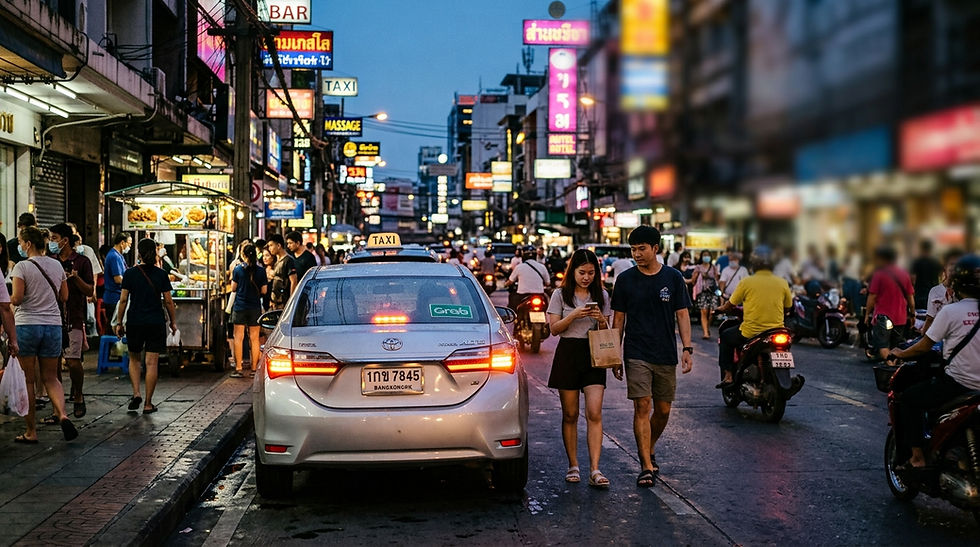
Which rideshare app is better in Bangkok, Grab or Bolt?
Grab is the more reliable overall choice in Bangkok, with more drivers, fewer cancellations, and an official airport pickup zone. Bolt is typically 15 to 30 percent cheaper on the same route, but has fewer drivers and is currently operating under an active regulatory license review in Thailand, so travelers should keep Grab installed as a backup.
The Bolt situation you should know about before you rely on it
In April 2026, Thailand's Department of Land Transport revealed that more than 2,000 legal cases were linked to Bolt's platform since the start of the year, following a widely reported incident in which a passenger jumped from a moving Bolt motorbike after the driver refused to stop. The DLT threatened not to renew Bolt's operating certificate, which was due to expire at the end of May. Regulators later granted Bolt a one-month extension to demonstrate concrete improvements to driver screening, warning that suspension or revocation could follow immediately if progress wasn't visible.
Bolt has responded publicly, saying it removed roughly 40,000 non-compliant driver accounts and rolled out facial recognition verification for drivers. As of this writing, the app continues to function normally, but the situation has already moved through several deadlines and could change again with little notice.
Zensseys Tip: Keep Grab installed no matter which app you plan to use day to day. It's the one option here that isn't tied to an active regulatory review, and it works as an instant fallback if Bolt's status changes mid-trip. For the current official word on which ride-hailing platforms are properly registered in Thailand, check
Thailand's Department of Land Transport directly rather than relying on any single blog post, including this one.

Price: Bolt usually wins, but not by as much as you'd think
On a typical 10km Bangkok trip, Bolt tends to run around 120 to 150 THB versus roughly 140 to 180 THB on Grab, a gap of about 15 to 30 percent on comparable routes. Both apps show the full fare upfront before you book, so there's no meter dispute either way.
One Bangkok visitor summed up their own price tracking on a travel forum thread, writing that Bolt was "consistently 15 ~ 35% cheaper than Grab" on their trips around the city. It's a small saving per ride, but it adds up fast over multiple trips a day.
Rain is the biggest price trap in Bangkok regardless of which app you use. Any rain at all tends to trigger surge pricing, and heavy rain can push fares to two or three times normal on either platform. The same is true late at night on weekends, especially around Sukhumvit, Thonglor, and RCA.
Zensseys Tip: Check both apps every single time, not just once at the start of your trip. The five seconds it takes to compare adds up to real savings, and if a price looks unusually high, waiting 10 to 15 minutes or walking a couple of blocks out of a surge zone often drops it 30 to 40 percent.
Between two ride-hailing apps running GPS in the background all day, your phone's battery won't last as long as you'd expect. An Anker Portable Power Bank earns its space in any daypack for exactly this reason.
Reliability: why Grab still wins when it actually matters
Grab has a larger driver network across Thailand, which translates directly into faster pickups and fewer cancellations, particularly during rain or rush hour when Bolt's smaller driver pool can leave you without a ride at all. Grab also bundles more vehicle types into one app, including licensed metered taxis, private cars, and motorbikes, which matters for travelers with luggage or a first, nervous ride through Bangkok traffic.
Bolt's driver base is real but noticeably thinner, and cancellations are the most common complaint, especially once you're outside central Bangkok.
Zensseys Tip: For anything time-sensitive, an airport departure, an early tour pickup, a flight connection, book with Grab, not Bolt. The savings from Bolt aren't worth missing a flight over.
Getting picked up at Suvarnabhumi and Don Mueang airports
Grab has a dedicated, clearly marked pickup zone at Suvarnabhumi Airport (Gate 4, Level 1), staffed with a Grab booth, which makes finding your driver straightforward even on a first visit. Bolt doesn't have the same fixed infrastructure, and pickups can shift between the departure level and other spots, so read the app's instructions carefully once you land.
Zensseys Tip: Book your ride while you're still connected to the airport's free WiFi in the arrivals hall, before heading down to the pickup level, so you're not standing outside trying to get a signal.
Outside Bangkok, coverage isn't equal
Both apps work well in Bangkok, but that changes fast once you leave the city. Grab has meaningfully wider coverage in Chiang Mai, Phuket, Pattaya, Koh Samui, and Hua Hin, while Bolt's driver network is patchier outside its strongest cities. If your Thailand itinerary strings together multiple cities or countries, this is exactly the kind of logistics gap a
travel advisor fills before you land, rather than sorting it out app by app once you're already there.
Grab vs. Bolt in Bangkok, compared
Grab | Bolt | |
Typical price (10km) | ~140-180 THB | ~120-150 THB |
Reliability | Larger driver network, fewer cancellations | Fewer drivers, more cancellations |
Best for | Airport transfers, time-sensitive trips, outside Bangkok | Short in-city rides when price matters most |
Current status | Fully licensed, no known issues | Operating under active DLT license review |
Practical tips for using either app
Download both apps before you land, not after you need one.
Link a card for convenience, but both apps accept cash too.
Screenshot your driver's license plate and photo before you get in.
Share your live trip with someone if you're riding alone late at night.
That last point matters most after a late night out, like the ones covered in our guide to Bangkok's rooftop bar scene, when you're tired, it's dark, and you're more likely to just tap the first ride offered without double-checking the details.
If your Thai is limited to "sawasdee," AirPods with Voice Translation make confirming a pickup spot or a destination change with a driver far less stressful than pointing at a phone screen.
Frequently asked questions
Is Bolt still safe to use in Thailand right now? As of this writing, yes, Bolt continues to operate normally, but its license is under active government review, so keep Grab installed as a backup in case the situation changes.
Which app is cheaper, Grab or Bolt? Bolt is typically 15 to 30 percent cheaper on the same route, though the gap narrows during Grab promotions or when Bolt applies surge pricing of its own.
Can I use these apps outside Bangkok? Yes, though Grab has notably wider and more reliable coverage in Chiang Mai, Phuket, Pattaya, and other cities, while Bolt's network thins out considerably outside its core cities.
Do I need to tip drivers? Tipping isn't expected on either platform, though rounding up is appreciated and won't be refused.
Which app has worked better for you in Bangkok? Let us know in the comments, and follow Zensseys for more practical Thailand guides like this one.
Getting around is just one piece of a Thailand trip. Our full Thailand trip planning guide covers the rest, and our Thailand itinerary page is a good starting point if you're still mapping out where to go. For help pulling it all together, a Travel Consultation with Zensseys takes the app-comparing and route-planning off your plate entirely.
Travel More, Discover More.
For a side-by-side feel of both apps in action around Bangkok, this comparison walks through the differences well:






Comments