


Thailand's 300-Baht Tourist Fee Still Isn't Being Collected — Here's Why So Many Sites Say It Is

The Short Answer
No — Thailand's proposed 300-baht (roughly $9 USD) tourist entry fee is still not being collected as of this writing, despite years of headlines that make it sound like a done deal. The fee, known locally as kha yiab phaen din ("fee for stepping on Thai soil"), has been approved in principle since 2023, delayed at least four separate times, and as recently as late August 2026 was still being debated by Thai tourism officials — with one working group now floating a higher figure of 450 baht instead. If you're budgeting for a Thailand trip right now, you don't need to set aside extra cash for this specific charge. You do need to stop trusting any article, video, or forum post that states a firm start date with total confidence.
What "Kha Yiab Phaen Din" Actually Is (And Why the 70-Baht Detail Matters More Than the Fee Itself)
The proposal, first given cabinet approval back in February 2023, would charge 300 baht to every foreign tourist arriving by air, with a separate 150-baht charge for land and sea arrivals that has since been shelved. The mechanism was always meant to be simple: airlines fold the fee into your ticket price, so you never stand in a separate payment line at Suvarnabhumi or Don Mueang.
The detail almost nobody covers well is what the money is actually for. Of the 300 baht, 70 baht is earmarked to fund automatic medical and accident insurance that would, in theory, cover every tourist from the moment they land — no policy purchase, no paperwork, just built-in coverage. That single design choice is why the fee keeps resurfacing every time Thailand has a bad tourism-safety headline. It followed the 2015 Erawan Shrine bombing and the 2018 Phuket boat disaster, both of which left the government covering emergency costs for foreign visitors out of its general budget. The 70-baht insurance carve-out is the government's attempt to stop doing that ad hoc.
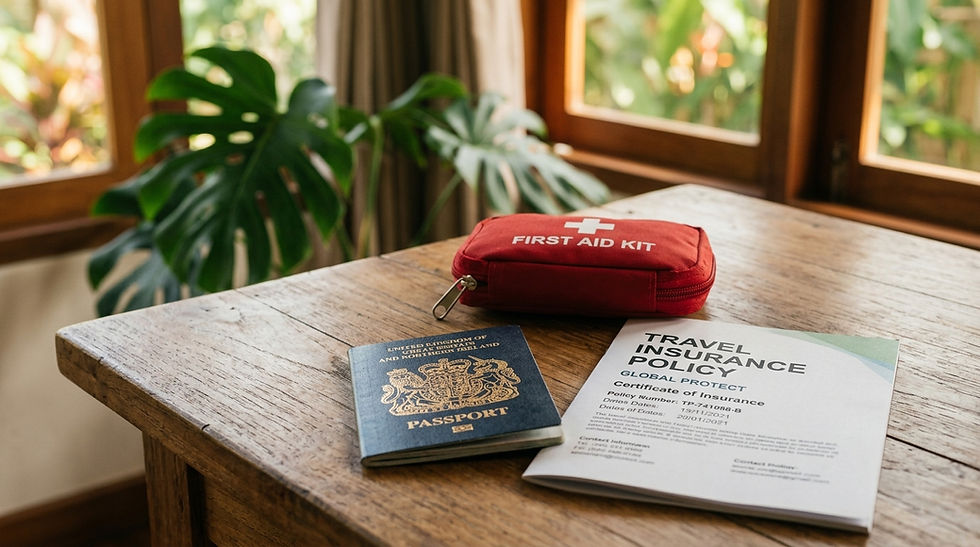
Zensseys Tip: Even if this fee eventually launches, the 70 baht of built-in "insurance" is not a substitute for real travel medical coverage. It's a thin accident/repatriation layer designed for catastrophic, ambulance-and-hospital scenarios — not for the kind of trip interruption, cancellation, or lost-luggage protection an actual travel insurance policy handles. Read our breakdown of Thailand's mandatory health insurance requirement before assuming any government-run scheme has you covered.
The Timeline of Delays — Why Every "Starting This Month" Headline Has Been Wrong
This is the part that gets left out of most explainers, and it's the reason the angle deserves its own article instead of another generic "here's what's coming" post:
February 2023: Thai Cabinet gives in-principle approval to a 300-baht air arrival fee and 150-baht land/sea fee.
2023–2024: Reported target launch dates of June 2023, then "early 2024," pass with no collection mechanism in place.
July 2025: Thailand's Tourism Ministry formally postpones the fee, citing weak visitor demand and pushing the target to Q2–Q3 2026.
January–February 2026: Multiple outlets report a "confirmed" February 2026 start date. It does not happen.
March–May 2026: Under the new "Anutin 2" government, officials fast-track the proposal again, narrowing it to air arrivals only and shelving the land/sea charge. Deputy PM Phiphat Ratchakitprakarn says it will be tabled at Cabinet — still no confirmed date.
August 25, 2026: A tourism-industry working group meets to discuss the plan again — and proposes raising the figure to 450 baht instead of 300.
That's not one delay. That's roughly a dozen distinct "it's happening soon" news cycles spread across three and a half years, and the fee still hasn't been collected from a single tourist.
Why So Many Travel Sites Keep Getting This Wrong
Part of the confusion is structural: because the policy has been approved in principle since 2023, it's technically accurate to write "Thailand has approved a 300-baht tourist fee" — and dozens of sites do exactly that, letting readers assume "approved" means "in effect." A TripAdvisor Thailand forum thread from earlier this year captured the frustration directly, with one longtime poster noting that both the entry fee and the 30-day visa change "regularly pop up on media outlets often implying they are already implemented," when in fact neither had a confirmed operational start date at the time. That's a useful gut-check: if an article doesn't cite a specific Royal Gazette publication date, treat "confirmed" language as aspirational, not enforceable.
It's worth contrasting this directly with Thailand's actual, already-in-force visa change. The reduction of the visa-exempt stay from 60 days to 30 days was published in the Royal Gazette on August 31, 2026, and took effect the very next day, September 1, 2026 — a real, dated, enforceable rule change. If you're planning a longer Thailand stay, that one genuinely affects you right now; the entry fee, as of the same date, still does not. We cover the mechanics of that shift, along with the related Thailand Digital Arrival Card requirement, separately — worth reading alongside this one so you're not confusing a real rule with a proposed one.
What to Actually Budget For a Thailand Trip Right Now
Since the entry fee isn't being collected, don't build it into your per-person budget yet. What you should actually plan for:
The 30-day visa-exempt stay (down from 60 days) if you're a passport holder from one of the eligible countries — confirmed and active since September 1, 2026.
Real travel medical insurance, purchased before departure, regardless of whether the 70-baht government scheme ever materializes.
The Thailand Digital Arrival Card (TDAC), submitted within the required window before landing — a separate requirement from any entry fee.
Standard trip costs — flights, hotels, transport, and activities — which we break down by itinerary length in what a Thailand trip actually costs.
A dedicated way to keep your TDAC confirmation, insurance policy, and passport together — a Royce Leather passport holder and travel wallet set earns its keep the moment an immigration officer asks for three documents at once.
Zensseys Tip: If you're the type of traveler who tracks every entry requirement personally, a compact travel first aid and health kit is worth packing regardless of what Thailand's insurance scheme ends up covering — Thai pharmacies are excellent, but having basics on hand at 2 a.m. on Koh Lanta beats a taxi ride to find a 24-hour pharmacy.
For travelers on a longer or multi-visa Thailand itinerary, digital nomads on a DTV visa should also be tracking the criminal-record-check requirement layered on top of all of this — we cover that separately in our guide to Thailand's new DTV visa rule. None of these requirements are the entry fee, and none of them require the 300 (or 450) baht that keeps making headlines.
How This Differs From Genuine "Zero-Dollar Tourism" Concerns
Thailand's push toward this fee is part of a broader shift toward what officials have started calling "quality tourism" — screening for higher-spending visitors rather than simply maximizing arrival numbers. One former tourism minister argued bluntly at the August 2026 working-group meeting that price-sensitive travelers priced out by a 300–450 baht fee is an acceptable trade-off, calling it a way to "screen tourists" alongside raising revenue. Whether or not you agree with that framing, it tells you something real: this isn't a minor administrative footnote the government has forgotten about. It's tied to Thailand's larger tourism strategy, which means it's more likely to eventually happen than a typical shelved proposal — just not on any of the dates that have been announced so far.
The Verdict
Don't reroute your Thailand budget over a fee that still isn't real. Do treat the insurance angle behind it as a genuine signal — buy your own travel medical coverage regardless of what Thailand's government eventually rolls out — and keep the entry fee separate in your head from the 30-day visa change, which is already in force. If you'd rather not track a half-dozen shifting Thai entry requirements yourself across visa length, TDAC timing, and whatever this fee ends up looking like, that's exactly the kind of moving-parts planning Zensseys handles for clients daily. As a service-disabled veteran-owned travel advisory, we build every Thailand itinerary around the entry rules that are actually in force on your travel dates — not the ones still stuck in committee.
You can also work with a Thailand travel advisor to have your entire trip's compliance checklist handled for you, from visa timing to insurance to on-the-ground logistics. For newsletter updates the moment Thailand's entry fee actually gets a confirmed date, you can subscribe to our travel alerts and skip the guesswork entirely.
Frequently Asked Questions
Do I need to pay 300 baht to enter Thailand right now? No. As of this writing, the fee has not been implemented at any airport, land crossing, or sea port. No airline is currently collecting it as part of ticket pricing.
Is the fee definitely 300 baht? Not necessarily. While 300 baht (about $9 USD) has been the figure discussed since 2023, an industry working group proposed raising it to 450 baht (about $13.50 USD) in an August 2026 meeting. Nothing is finalized.
Will the fee cover my travel insurance if it launches? Only partially, and only for a narrow set of scenarios. Of the proposed 300 baht, roughly 70 baht is earmarked for basic accident and medical coverage — not comprehensive travel insurance. Buy your own policy regardless.
How is this different from Thailand's 30-day visa change? The visa-exempt stay reduction from 60 to 30 days was published in the Royal Gazette on August 31, 2026, and took effect September 1, 2026 — it's real, dated, and enforceable. The entry fee has no such publication or effective date.
Where can I check if the fee has actually launched before my trip? Look for a specific Royal Gazette publication date or an official Tourism Authority of Thailand announcement — not just a news headline. If a source can't point to either, treat the "start date" as unconfirmed.
About the Author
William Harris is the founder of Zensseys, a service-disabled veteran-owned luxury travel advisory specializing in Thailand, Vietnam, Indonesia/Bali, and the Philippines. He tracks Thailand's shifting entry requirements so his clients don't have to — reach out for a free consultation or call/text (210) 239-7540 to start planning.





Comments