


Do You Actually Need Health Insurance to Enter Thailand in 2026? What's Required vs. What's Just Proposed
The Short Answer
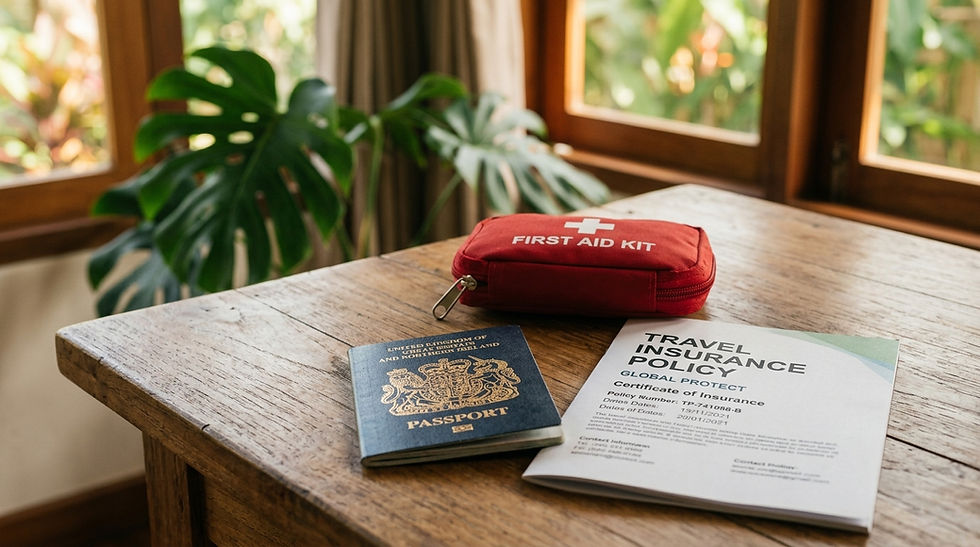
No — as of August 2026, Thailand does not require standard tourists to carry health insurance to enter the country. A proposal to make it mandatory for all foreign visitors has been under review by the Ministry of Public Health since early 2026, but it's still awaiting Cabinet review with no confirmed implementation date. Where insurance genuinely is mandatory right now is on specific long-stay visas — most clearly the O-A/O-X retirement visa, which requires $100,000 USD in coverage. The Destination Thailand Visa (DTV) sits in a confusing middle ground: it's not on the official national requirements list, but individual embassies frequently request it anyway, with wildly different numbers depending on where you apply.
What's Actually Happening With the "Mandatory Insurance" Proposal
Thailand's Public Health Minister Pattana Promphat has been discussing a plan since May 2026 to require health insurance for all foreign visitors — tourists, short-term travelers, and migrant workers alike — as a way to address unpaid medical bills from uninsured foreigners, which Thai officials have put at roughly 100 million baht annually. It's a real proposal with real momentum, and it's been widely reported since spring 2026. But reported and enforced are two different things: as of the most recent updates, the policy is still under review, pending Cabinet approval, with no finalized coverage minimums, premium structure, or effective date. If you're seeing headlines calling this "now mandatory," they're getting ahead of where the actual policy stands.
Zensseys Tip: Don't let a headline talking about what Thailand "is introducing" substitute for checking whether it's actually in force yet. This is a good habit for any Thailand entry-rule story in 2026 — the same gap between proposal and reality has tripped people up on other recent headlines too.
Where Insurance Actually Is Mandatory Right Now
If you're on a standard 30-day visa exemption or a typical Tourist Visa (TR), you genuinely don't need to show proof of insurance to enter — it's recommended, not required. That changes sharply once you move to certain long-stay categories. The O-A and O-X retirement visas have a firm, well-established requirement: most embassies require $100,000 USD (roughly 3,000,000 THB) in health coverage, and for in-country extensions, Thai immigration offices generally expect at least 400,000 THB inpatient and 40,000 THB outpatient coverage. This is the one Thailand insurance requirement that's genuinely settled and consistently enforced, not proposed.
The DTV's Confusing Middle Ground
This is where it gets genuinely inconsistent, and worth knowing if you're considering the Destination Thailand Visa for a longer remote-work stay. Health insurance does not appear on Thailand's central Ministry of Foreign Affairs checklist for the DTV — it's not a nationally mandated requirement the way it is for O-A/O-X. In practice, though, individual Thai embassies and consulates set their own local expectations, and they vary meaningfully: some ask for nothing, some request proof of roughly $50,000 USD in coverage, and others specify Thai-denominated figures like 40,000 THB inpatient and 10,000 THB outpatient coverage. There's no single authoritative number to plan around — the honest answer is that it depends entirely on which embassy processes your specific application.
Zensseys Tip: If you're applying for a DTV, get comprehensive health coverage regardless of whether your specific embassy asks for it. It costs a few hundred dollars a year and removes the risk of your application stalling over a requirement that wasn't clearly published anywhere central.
Why This Matters Even Without a Mandate
Here's the part that has nothing to do with what's technically required: Thai hospitals don't accept U.S. health insurance, including Medicare, and out-of-pocket costs for a serious injury or emergency evacuation can run well into five figures fast. Scooter accidents alone send a steady stream of uninsured tourists into Thai hospital billing departments every year, which is precisely the pattern driving the mandatory-insurance proposal in the first place. Whether or not Thailand ever formalizes the requirement, carrying a policy with genuine medical coverage — most guidance suggests at least $50,000 in emergency medical coverage and $100,000 in medical evacuation coverage — is one of the least optional parts of trip planning, mandate or not.
Zensseys Tip: If motorbiking, diving, or any adventure activity is even a maybe on your itinerary, confirm your policy specifically covers it before you buy — a lot of standard travel policies exclude scooter accidents by default, which is exactly the scenario Thai hospitals see most often from tourists.
Packing for the What-Ifs
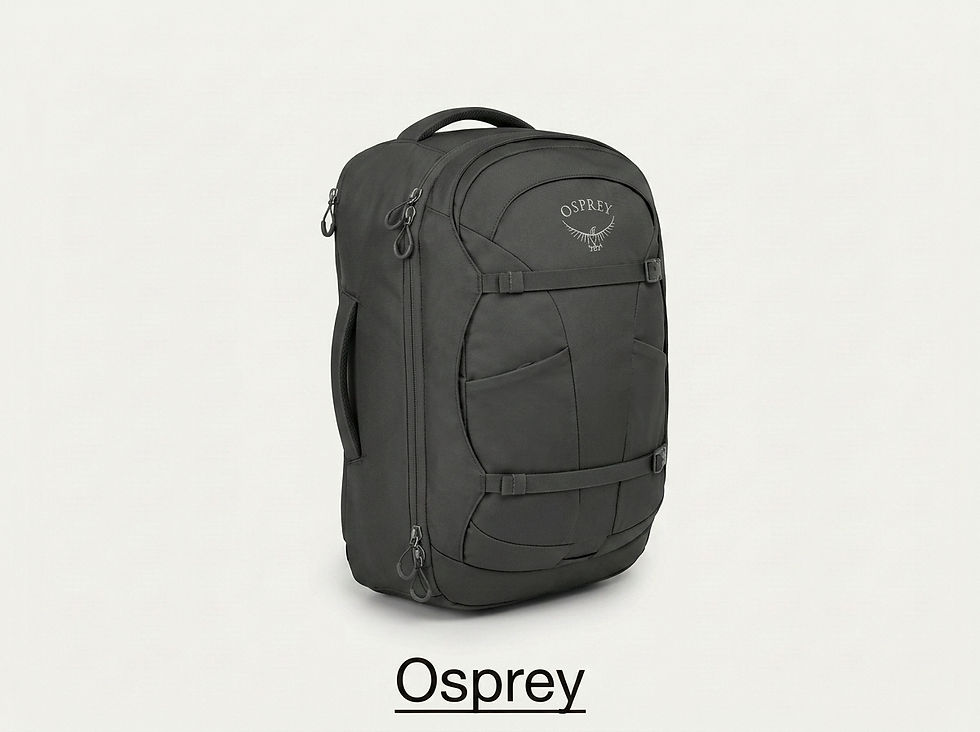
Insurance covers the financial side of a bad day, but a little prevention goes a long way too. A compact travel first aid/health kit handles the minor cuts and scrapes that don't need a hospital visit, and if scooters are part of your trip, a set of Ray-Ban / Maui Jim polarized sunglasses cuts glare on Thailand's bright coastal roads — small things, but exactly the kind of small things that keep a trip from turning into an insurance claim in the first place.
The Verdict
Whatever visa path you're on, it's worth reviewing our broader Thailand planning resources before you lock in flights.
For a standard tourist trip, you don't need to prove insurance at the Thai border today, and anything claiming otherwise is describing a proposal, not a law. If you're on an O-A/O-X retirement visa, treat the $100,000 USD requirement as fixed and non-negotiable. If you're applying for a DTV, check your specific embassy's current local requirement rather than assuming a number you read somewhere applies to you — and carry real coverage either way, because Thai hospitals bill uninsured foreigners at rates that make the premium look cheap by comparison. If your Thailand plans involve a longer stay or a visa category beyond standard tourism, a Zensseys Travel Consultation can help you sort out exactly what your specific visa path actually requires.
Frequently Asked Questions
Do I need travel insurance to enter Thailand as a tourist in 2026?
No, not currently. Standard visa-exempt entry and the Tourist Visa (TR) don't require proof of insurance. A proposal to make it mandatory for all visitors is still under government review with no confirmed implementation date.
Is health insurance mandatory for the DTV visa?
Not on Thailand's central national requirements list, but individual embassies frequently request it as a local requirement, with figures that vary by embassy — anywhere from no requirement at all to roughly $50,000 USD in proof of coverage. Check with the specific embassy processing your application.
Which Thailand visa actually requires mandatory health insurance right now?
The O-A and O-X retirement visas, which require $100,000 USD (about 3,000,000 THB) in coverage — this is a firm, consistently enforced requirement, unlike the DTV's embassy-by-embassy approach.
Will Thailand's proposed mandatory tourist insurance actually happen?
It's genuinely possible — officials have been discussing it since early 2026 with real intent — but as of now it remains a proposal pending Cabinet review, not a confirmed rule with a set date.
Should I get travel insurance for Thailand even though it's not required?
Yes. Thai hospitals don't accept U.S. health insurance, out-of-pocket costs for injuries or emergencies can be substantial, and scooter accidents are a common, expensive scenario for uninsured tourists. Coverage of at least $50,000 in emergency medical and $100,000 in evacuation coverage is a reasonable baseline regardless of any government mandate.
This article was written by William Harris, founder and lead travel advisor at Zensseys, a luxury travel advisory specializing in Thailand, Vietnam, and Indonesia. William tracks Thailand's evolving entry requirements to help travelers separate confirmed rules from proposals still working through the system.




Comments