


Does Thailand's 6-Month Passport Rule Actually Get Enforced? What Immigration Officers Really Check vs. What Airlines Check

Yes, but the checkpoint that actually stops you almost never happens at the Thai immigration counter. It happens at your airline's check-in desk, often before you've even left your home country, when a gate agent runs your passport through the same database — IATA's Timatic system — that every major airline uses to decide who gets denied boarding. Thailand's government reaffirmed the six-month validity requirement as recently as its May 2026 visa announcement, and Thai immigration officers do have the authority to turn you away at the counter too. But in practice, the overwhelming majority of travelers who get stopped never reach that counter at all — they get stopped at the gate, by an airline avoiding a fine, hours or days before their flight to Bangkok ever leaves the ground.
That distinction matters more than it sounds, because it changes what "the rule" actually protects against and where you should focus your prep. If you're already researching Thailand's documentation requirements, our guide to Why Your Thailand Digital Arrival Card Doesn't Replace Your Visa covers the other document that trips travelers up at the same checkpoint, and The Surprising Passport Mistake That Could Ruin Your Trip rounds out the less-obvious passport issues worth checking before you fly — but passport validity is the one that stops you before you even board.
Why Airlines, Not Immigration, Are the Real Gatekeeper
Airlines are contractually and financially on the hook if they carry a passenger who then gets refused entry at their destination. Under the international framework airlines operate within, a carrier that boards someone with an invalid passport can be fined by the destination country and is typically required to fly that passenger back at its own expense. To avoid that cost, airline check-in systems flag passport validity automatically the moment your passport is scanned, cross-referencing it against Timatic's country-by-country entry requirements — including Thailand's six-month rule. If the system flags a shortfall, the agent at the counter has no discretion to override it; you simply don't get a boarding pass, regardless of what the Thai Immigration Bureau's own officers might have done with you at Suvarnabhumi.
This is why years of traveler reports on forums like ASEAN NOW and Ask Thailand describe a consistent pattern: travelers who somehow reached the immigration counter with four or five months of validity were sometimes waved through without incident, while travelers with the identical passport were denied boarding entirely by their airline before they ever got that far. One traveler's account of being turned away at check-in in Bahrain — with the correct visa, correct ticket, and a passport that simply had five months and change left — sums up the actual risk: the country you're flying to is rarely the first place your passport gets checked.
Zensseys Tip: Renew your passport at the airline check-in counter mentally, not the immigration counter. If you're within six months and a few weeks of expiration, assume your airline's system will flag you regardless of what you've read about Thai immigration being lenient — leniency at the border doesn't help you if you never get on the plane.
What Thailand's Immigration Officers Actually Check at the Counter
If you do make it to the immigration counter at a Thai airport, officers scan your passport, check your Digital Arrival Card QR code, verify your visa or visa-exemption status, and — per Thailand's own May 2026 cabinet announcement — confirm at least six months of remaining validity as one of two conditions that apply "regardless of your visa-free duration," alongside a completed TDAC. Historically, this specific check at the physical counter has been reported as less consistently enforced than airline check-in, with a number of older traveler accounts describing officers letting shorter-validity passports through as long as the traveler's intended stay fit comfortably within the remaining validity. That inconsistency is not something to plan around in 2026: Thailand's own government messaging now states the six-month requirement plainly as a standing rule, and immigration officers retain full authority to deny entry on that basis alone, even for travelers who somehow got past their airline.
Zensseys Tip: "I read that Thai immigration doesn't really enforce it" is true often enough to be dangerous advice. It describes the counter, not the checkpoint that actually determines whether you get to the counter at all. Treat the requirement as fully enforced at both stages and you'll never need to find out which forum post was accurate.
Vietnam Just Closed the Gap Thailand Never Fully Had
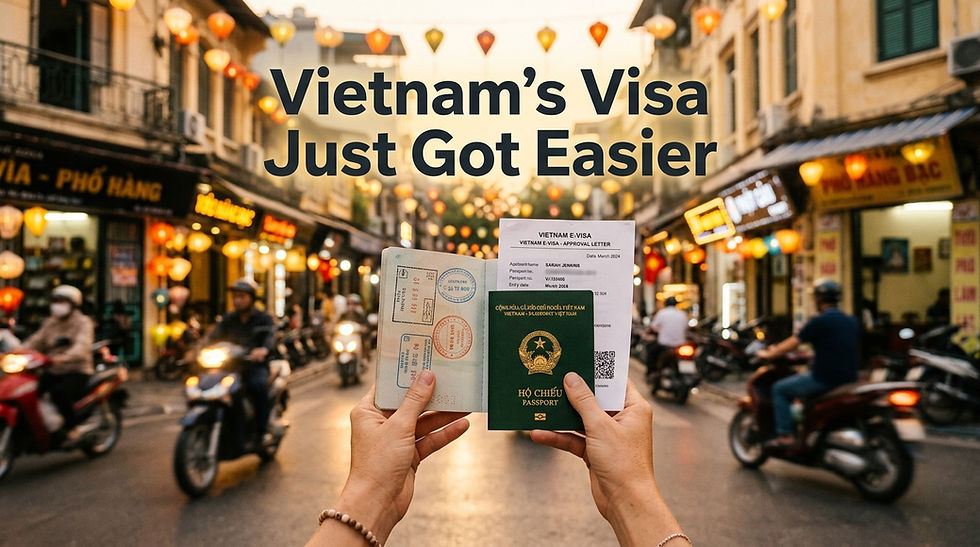
Vietnam's version of this story took a sharp turn in 2026. Before March 1, the six-month rule existed on paper in Vietnam much like it historically has in Thailand, and enforcement at border gates was genuinely uneven — travelers with four or five months of validity were sometimes waved through. Vietnam's Immigration Department ended that inconsistency deliberately: as of March 1, 2026, the rule is enforced with zero exceptions at all entry points, applying uniformly to e-visa holders, visa-on-arrival applicants, and every visa-exempt nationality on the 26-country list. A passport with six months minus a single day is now rejected the same way at a land border as it is at Tan Son Nhat International Airport. If you're weighing a combined Thailand-Vietnam itinerary, our Vietnam Just Made It Easier While Thailand Made It Harder breakdown covers how the two countries' 2026 policy shifts now pull in opposite directions on stay length — passport validity is the one requirement that's tightened in both places at once.
What to Actually Do If You're Borderline
If your passport has somewhere between five and seven months of validity left on your intended arrival date in Thailand or Vietnam, don't gamble on which forum thread was accurate. Renew now. U.S. passport renewals typically run six to twelve weeks through standard processing, or one to two weeks expedited, and most countries let you renew up to nine to twelve months before the old passport's expiration date without losing any remaining validity — so renewing early costs you nothing. Keep your old passport if it has a valid visa still tied to it, since some visas remain attached to the original document rather than transferring automatically to a new passport number, and carry both if your airline or immigration officer asks to see the visa history. It's a smaller-stakes mistake than the kind covered in What Actually Happens If You Overstay a Visa in Thailand by a Few Days, but it's the one that keeps you from ever boarding in the first place.
Zensseys Tip: Calculate from your arrival date in-country, not your departure date from home or your return date. A passport that comfortably covers a 10-day trip can still fail the rule if the arrival date itself falls inside that six-month window — the length of your actual stay is irrelevant to this specific check.
A well-organized document set matters here too — a Royce Leather passport holder and travel wallet set keeps your passport, boarding pass, and visa printouts together and visibly presentable at check-in, which matters when an agent is scanning for validity issues under time pressure, and an anti-theft RFID crossbody bag keeps that same set of documents secure and accessible through the queue rather than buried at the bottom of a carry-on.
The Verdict
The six-month rule for Thailand and Vietnam is real, current for 2026, and getting stricter rather than looser — but the enforcement point that actually ends most trips is your airline's check-in counter, driven by a database check most travelers never hear about until it stops them. Renew early if you're within a few months of the threshold, and don't let a forum post about a lenient Thai immigration officer talk you into skipping that renewal. If you're planning a multi-stop Thailand and Vietnam trip and want the document timeline mapped against your actual dates, a Zensseys travel consultation is a fast way to catch this before it becomes a departure-day problem.
FAQ
Does Thailand really require six months of passport validity? Yes. Thailand's government reaffirmed this as a standing entry requirement in its May 2026 visa announcement, applying regardless of how long your visa-free stay is. Airlines enforce it at check-in via the Timatic database, and immigration officers can also deny entry on this basis at the counter.
Is Vietnam's six-month rule new? The rule itself isn't new, but strict, uniform enforcement is. As of March 1, 2026, Vietnam closed prior inconsistencies at its border gates and now enforces the requirement with no exceptions across all entry points and visa types, including visa-exempt nationalities.
Will Thai immigration let me in with slightly less than six months if my trip is short? Some older traveler reports describe officers allowing this if the trip fit comfortably within the remaining validity, but this isn't something to plan around given Thailand's 2026 restatement of the rule — and it's irrelevant if your airline denies you boarding before you ever reach the counter.
Where does the six-month countdown actually start? From your arrival date in Thailand or Vietnam, not your departure date from home and not your planned exit date from the country. A short trip doesn't reduce the required validity.
What should I do if I'm not sure whether my passport qualifies? Calculate six months forward from your planned arrival date and compare it to your passport's expiration date. If it's close, renew now rather than waiting — most countries allow early renewal without losing remaining validity, and airline check-in systems don't make exceptions for travelers who were "probably fine."
About the Author: This guide was written by the team at Zensseys, a luxury travel advisory specializing in Thailand, Vietnam, and Indonesia/Bali. Meet William, Zensseys' founder and lead travel advisor, and get in touch for personalized help planning your next Southeast Asia trip.







Comments