


Vietnam Just Made It Easier While Thailand Made It Harder: Your 2026 Southeast Asia Visa Guide
Updated: Jul 26
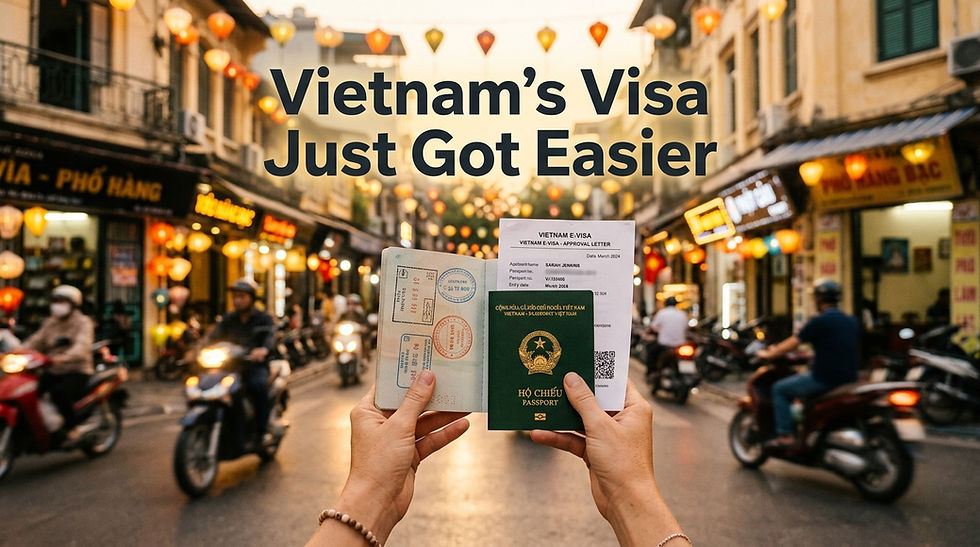
While Thailand tightens its visa-free stay back down to 30 days, Vietnam has quietly gone the opposite direction — rolling out a 90-day, multiple-entry e-visa open to every nationality on earth, dozens of new entry points, and a brand-new international airport to match. If you've been eyeing Southeast Asia for a longer trip in 2026, the math has changed.
Is Vietnam Easier to Enter Than Thailand in 2026?
For most travelers, yes. Vietnam's e-visa now covers every nationality with a 90-day, multiple-entry stay and dozens of new border crossings, while Thailand is cutting its visa-free stay from 60 days back down to 30. For long-stay travelers, remote workers, and anyone planning a multi-country Southeast Asia loop, Vietnam is currently the more flexible base to build a trip around.
Two Countries, Two Very Different 2026s
Southeast Asia's two most-visited mainland destinations are moving in opposite directions this year, and the timing isn't a coincidence. Thailand is responding to years of visa-run abuse and overtourism complaints by tightening entry rules across the board. Vietnam, meanwhile, is leaning hard into becoming the region's easiest country to enter, stay in, and return to — a deliberate play for the long-stay, remote-work, and multi-country traveler that used to default to Bangkok or Chiang Mai.
That contrast matters for anyone building a Southeast Asia itinerary right now. It's not just about which country is 'better' — it's about which entry rules actually fit the trip you're planning.
What's Actually Changing in Thailand
The short version: Thailand's Cabinet has approved a rollback of the 60-day visa exemption to 30 days for most of the 93 eligible nationalities, with some countries seeing the allowance cut to 15 days. The change takes effect 15 days after publication in the Royal Gazette, and until that happens, the current 60-day rule still applies to new arrivals. We covered the details — including who's affected and what to do if you're currently mid-trip — in our Thailand travel guide.
Vietnam's Visa Overhaul, Explained
Vietnam's e-visa system has changed more in the past three years than in the previous decade. As of 2026, the official Vietnam e-visa portal issues electronic visas to citizens of every country and territory, valid for up to 90 days, on either a single-entry or multiple-entry basis. That's the headline change, but it's not the only one:
• 83 entry points now accept e-visa holders — more than double the original 41 — including land borders and seaports, not just major airports.
• A new international gateway, Long Thanh Airport near Ho Chi Minh City, has been added to the list of e-visa entry points.
• A mandatory digital arrival card is being piloted at Tan Son Nhat International Airport (Ho Chi Minh City) for all arriving foreign passport holders, whether visa-exempt or on an e-visa, submitted online within 72 hours before landing.
• Two new visa categories for IT, digital technology, and specialized talent are rolling out as part of Vietnam's push to position itself as a regional tech hub.
Zensseys Tip: If you're planning to hop between Vietnam, Thailand, Laos, or Cambodia on one trip, apply for the multiple-entry e-visa ($50 vs. $25 for single-entry). It lets you exit and re-enter Vietnam as many times as you want within the 90-day window — useful if your route isn't a straight line.

Who Still Gets Visa-Free Entry to Vietnam
Vietnam hasn't dropped its visa-exemption program — it's expanded it. As of 2026, 38 nationalities qualify for visa-free entry, with stay lengths that vary by country:
• Germany, France, Italy, Spain, the UK, Russia, Japan, South Korea, Denmark, Sweden, Norway, Finland, and Belarus, plus 12 additional European countries added in August 2025, qualify for 45 days visa-free through March 2028.
• ASEAN neighbors — Brunei, Cambodia, Indonesia, Laos, Malaysia, Myanmar, the Philippines, Singapore, Thailand, plus Chile and Panama — get 30 days visa-free.
• Travelers flying directly into Phu Quoc Island (not connecting through the mainland first) get 30 days visa-free regardless of nationality — a workaround worth knowing if your passport isn't on the main exemption list.
Notably, U.S. and Canadian citizens are not on the visa-exemption list, which means the e-visa is the standard route in either way.
Thailand vs. Vietnam: 2026 Entry at a Glance
Category | Thailand (2026) | Vietnam (2026) |
Standard visa-free stay | 60 days now → 30 days once new rules take effect | 0–45 days, depending on nationality (many nationalities need the e-visa) |
E-visa / online visa | Not the primary entry route for most tourists | Open to all nationalities, up to 90 days, single or multiple entry |
Multiple entry option | Limited; repeated visa-exempt entries now restricted | Yes — exit and re-enter freely within the 90-day window |
Recent direction | Tightening (fewer days, more scrutiny) | Expanding (more days, more entry points, more nationalities) |
Best fit for | Short holidays under 30 days | Long stays, remote work, multi-country loops |
How to Apply for the Vietnam E-Visa
Applying takes a few minutes through the official Vietnam Tourism visa portal, and here's the process:
• Confirm your passport is valid for at least 6 months beyond your entry date, with two blank pages.
• Apply directly at the official government portal — avoid third-party sites that charge two to three times the real fee.
• Choose single entry ($25) or multiple entry ($50); if there's any chance you'll cross a border and come back, pay the extra $25 up front.
• Upload a digital passport photo and pay by credit or debit card.
• Processing typically takes 3 business days, though it can run longer during peak season — apply at least two to three weeks before departure to be safe.
Zensseys Tip: Vietnam does not allow e-visa extensions or renewals from inside the country. When your 90 days are up, you have to exit and apply for a new one from abroad — factor that into your itinerary if you're planning a long-term stay.
What Travelers Are Saying
Digital nomad forums and Reddit threads on Vietnam's e-visa system have been active this year, and the traveler consensus is fairly consistent (worth noting these are traveler opinions, not official guidance): applicants report the online process itself is smooth and rarely needs an agent, but delays cluster around incorrect entry-point selection — choosing a border crossing or airport that isn't on the approved e-visa list is the most commonly cited mistake. Several nomads also flagged that Vietnam still has no dedicated digital nomad visa despite recurring headlines about a proposed 10-year “Golden Visa” — as of mid-2026, that program remains a proposal with no application portal, so the 90-day e-visa is still the practical option for remote work stays.

Where the Extra Time Takes You
A 90-day window instead of a 30-day one changes what kind of trip is actually possible. Instead of picking one region, travelers are stringing together Hanoi's Old Quarter and Ha Long Bay in the north, Hoi An and Da Nang in the central coast, and Ho Chi Minh City and the Mekong Delta in the south — a route that's genuinely difficult to do justice in under a month.
For the central coast leg, the InterContinental Danang Sun Peninsula Resort is one of our most-requested Curated Travel Deals for exactly this kind of extended Vietnam itinerary — a private peninsula setting between Da Nang's beaches and Hoi An's lantern-lit Ancient Town, with enough room to slow down for a few days mid-trip.
Packing for a Longer Vietnam Trip
A 90-day e-visa means more time in more climates — humid south, cooler north, coastal center — so packing smart matters more than usual:
• Anker Portable Power Supplies for long travel days between regions without reliable outlets.
• EPICKA Universal Travel Adapter — Vietnam uses a mix of plug types, so a universal adapter avoids the guesswork.
• AirPods with Voice Translation for real-time help with Vietnamese outside the major tourist areas.
• Eagle Creek Packing Cubes to keep a 90-day wardrobe organized across multiple climates and hotel stops.
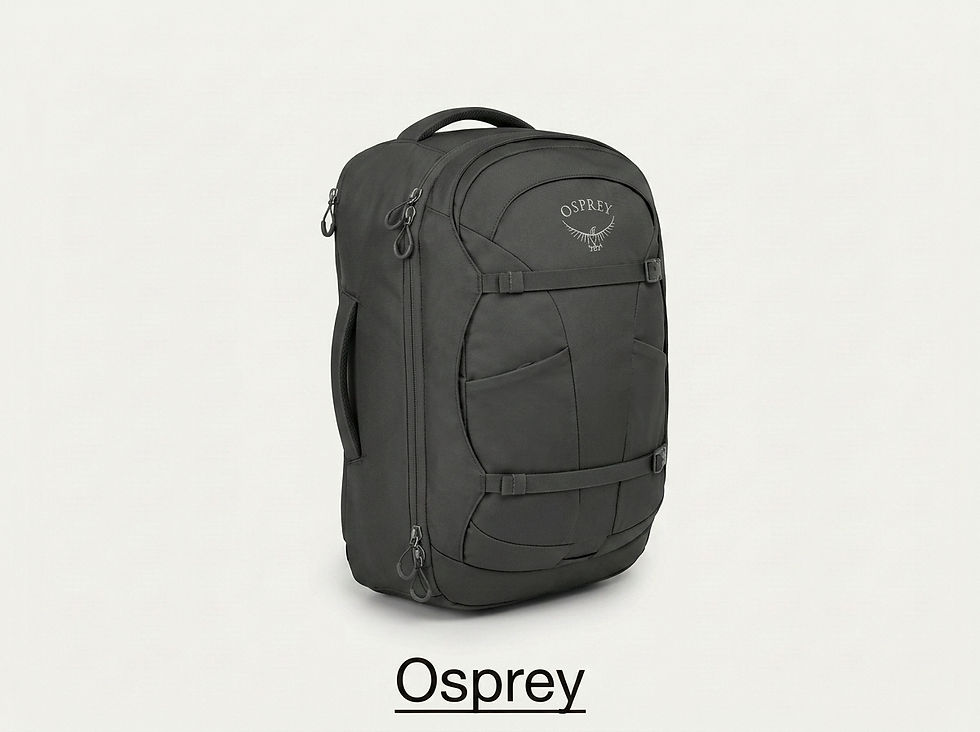
• Osprey Travel Backpack for a trip that's more likely to involve trains, boats, and overnight buses than a single hotel base.
• GoPro Hero for Ha Long Bay's limestone karsts and the boat trips around Phu Quoc.
• Waterproof YETI Panga Dry Bag to keep your phone and passport dry on any boat excursion.
• Nocs Provisions Compact Binoculars for spotting wildlife and karst formations on a Ha Long Bay cruise.
• Bose QuietComfort Noise-Cancelling Headphones for the long-haul flight over, especially if you're staying the full 90 days.
• Slip Silk Eye Mask & Pillowcase Travel Set for a more comfortable long-haul flight and jet lag recovery.
• Bombas Compression Socks — a small comfort upgrade that matters more on a 90-day trip than a weekend one.
• Royce Leather Passport Holder — with a multiple-entry e-visa, your passport is coming out at immigration more than once; a dedicated holder keeps it (and your visa printout) protected.
Frequently Asked Questions
Do U.S. citizens get visa-free entry to Vietnam?
No. The United States is not on Vietnam's visa-exemption list, so American travelers need the e-visa, which allows up to 90 days and can be single or multiple entry.
Is the e-visa the same as a visa on arrival?
No. A true visa on arrival still requires a pre-arranged approval letter obtained online before you fly, then a physical visa sticker collected at the airport. The e-visa is fully online from start to finish and is generally the simpler option for most travelers.
Can I extend my Vietnam e-visa without leaving the country?
No. Vietnam does not currently allow e-visa extensions or renewals from inside the country. When the visa expires, you need to exit and apply for a new one from abroad.
How long can Americans currently stay in Thailand visa-free?
As of publication, the 60-day exemption is still in force for new arrivals, but Thailand's Cabinet has approved a rollback to 30 days once the new rules are published in the Royal Gazette. See our Thailand travel guide for the latest.
What is Vietnam's new digital arrival card?
It's a mandatory online form, similar to programs in neighboring countries, currently being piloted at Tan Son Nhat International Airport in Ho Chi Minh City. It applies to all arriving foreign passport holders, visa-exempt or not, and must be submitted within 72 hours before landing.
If you've traveled Vietnam's e-visa system recently, we'd genuinely love to hear how it went in the comments — and if you're planning a longer Southeast Asia trip this year, following along on social gives you the next update the moment the Thailand rules officially change.
Planning a Longer Southeast Asia Trip?
A 90-day window opens up itineraries that simply don't work on a 30-day visa — and getting the sequencing, entry points, and Royal Gazette timing right across two countries is exactly where a Travel Consultation earns its keep. Our Travel Planning & Booking service can build the full route around it, and our Curated Travel Deals page has more hand-picked stays across Vietnam and the wider region.
Travel More, Discover More.
For a walkthrough of the application itself, this recent step-by-step guide covers the form field-by-field and flags the mistakes that cause the most delays:
Once your visa is sorted, the next practical question is how to get around once you land. Grab vs. Xanh SM in Vietnam breaks down which ride-hailing app to actually use in 2026.




Comments