


Thailand's 2026 Visa Shake-Up: What the 60-Day to 30-Day Change Really Means
Updated: Jul 26

Thailand is cutting its visa-free stay from 60 days down to 30 — here's exactly what's changing, when it takes effect, and the simplest ways to legally stay longer if a month isn't enough.
If you've been planning a Thailand trip around the old 60-day visa exemption, it's time for an update. Thailand's Cabinet has approved a plan to cut the popular 60-day visa-free stay back down to 30 days for most nationalities, and the change has been the single biggest topic in Thailand travel planning circles this year.
This isn't a rumor and it isn't panic-inducing internet chatter — it's a real policy shift tied to a much bigger immigration crackdown happening across the country right now. The good news: once you understand what's actually changing and why, staying longer than 30 days is still very possible. You just need to plan for it instead of assuming you can wing it at the airport.
Zensseys tracks entry-requirement changes like this closely because a single misunderstood visa rule can derail an otherwise perfect trip. Below, we'll walk through exactly what's changing, who it affects, and — most importantly — what you can do right now to make your stay easier if you want more than a month in the Kingdom.
How Long Can I Stay in Thailand Without a Visa in 2026?
Most travelers from eligible countries can currently stay visa-free for 60 days, but Thailand's Cabinet approved a reduction to 30 days on May 19, 2026. As of this writing, the change was still pending publication in the Royal Gazette and hadn't taken effect, so the 60-day rule remained in force. Once published, the new rule applies 15 days after that date, so always check the current status before booking.
What's Actually Changing With Thailand's Visa Exemption
Since July 2024, tourists from 93 eligible countries have been able to enter Thailand and stay for up to 60 days without applying for a visa in advance. It's been one of the most generous visa-free allowances in Southeast Asia, and it's part of why Thailand became such an easy first stop for long-haul travelers, digital nomads, and multi-country backpackers alike.
That's changing. Under the reform, most of the 54 previously eligible countries will drop from 60 days back to 30 days, and a smaller group — currently the Maldives, Mauritius, and Seychelles — will see an even shorter 15-day allowance. The reduction was driven largely by concerns from Thai tourism and hospitality associations that the longer stay period was being misused for unauthorized work, illegal condo subletting, and other activity outside genuine tourism.
Zensseys Tip: Because the effective date depends on Royal Gazette publication rather than a fixed calendar date, the safest move is to check your entry allowance a few days before you fly rather than relying on what you remember from a previous trip.
Who's Affected by the New 30-Day and 15-Day Rules
Traveler Group | Old Allowance | New Allowance (Once In Effect) |
Most of the 54 eligible countries (US, UK, EU nations, Canada, Australia, Japan, and others) | 60 days | 30 days |
Maldives, Mauritius, Seychelles | 60 days | 15 days |
Countries using Visa on Arrival | 15 days | Eligibility under review for fewer countries |
Why Thailand Is Tightening Its Visa Rules Right Now
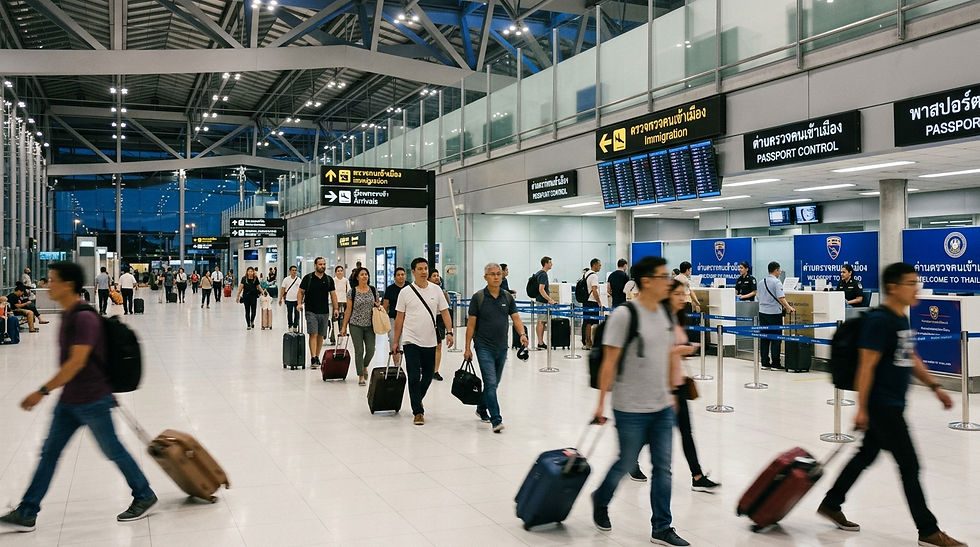
The visa change is one piece of a much larger enforcement push. Thai Immigration has been running what officials call the “No Entry, No Stay, No Escape” strategy — sometimes shortened to the “3 NOs” policy — aimed at cracking down on visa abuse, unauthorized work, and transnational crime networks operating under the cover of tourism.
● No Entry: pre-departure screening now flags high-risk travelers before they even board a flight to Thailand, using a digital blacklist system.
● No Stay: immigration is actively revoking visas, including student and volunteer visas, from people caught working illegally or overstaying their welcome.
● No Escape: raids across tourist-heavy provinces are targeting people already inside the country who are working or operating businesses without proper authorization.
None of this is aimed at genuine tourists. But it does mean immigration officers are paying closer attention to travel patterns — especially repeated 60-day exemption entries that look more like long-term residence than a vacation. If you've historically done back-to-back visa runs to stay in Thailand indefinitely, that approach is riskier than it used to be.
The Other 2026 Entry Requirements You Need to Know
The visa-length change isn't happening in isolation. A few other entry requirements are now standard for every traveler, regardless of nationality or visa type:
● Thailand Digital Arrival Card (TDAC): every foreign national entering by air, land, or sea must complete this digital form within 72 hours of arrival. It replaced the old paper TM6 form and applies to every entry, including repeat visits.
● Proof of funds: immigration officers can ask travelers to show at least 20,000 baht per person (or 40,000 baht per family) in available funds, so it's worth having a bank statement or card readily accessible.
● Six-month passport validity: a passport expiring within six months of your arrival date can get you turned away before you even board your flight — check this before you buy tickets, not after.
● Onward travel proof: airlines and immigration both may ask to see a confirmed return or onward ticket, so build that into your booking timeline.
● THIM app: Thailand's new Immigration Management app is currently optional alongside the TDAC web portal, but it becomes mandatory for all arriving foreign nationals in August 2026.
You can complete the arrival card directly through the official Thailand Digital Arrival Card portal, and it's worth bookmarking the Royal Thai Immigration Bureau website for the most current entry requirements before you travel, since these rules have shifted more than once in the past two years.
How to Make Staying Longer in Thailand Easier
Here's the part that actually matters if you're planning a trip longer than a month: 30 days doesn't have to be your ceiling. There are several legitimate, well-established ways to extend your time in Thailand, and choosing the right one before you fly is far easier than trying to solve it in an immigration office queue.
Option 1: The In-Country 30-Day Extension
If you enter on the visa exemption and simply want a bit more time, you can apply for a single 30-day extension at any local immigration office once you're already in Thailand. It's straightforward but has firm limits:
● Cost: 1,900 THB, payable in cash only.
● Form: the TM.7 application, available online or at the immigration office.
● Documents: passport, passport photo, and photocopies of your passport data page and entry stamp.
● Limit: this extension can only be used once per entry — it cannot be extended a second time.
Zensseys Tip: Apply about a week before your current stamp expires, not the day of. Immigration offices like Bangkok's Chaeng Wattana get busy, and arriving right at opening time will save you hours in line.
Option 2: Apply for a Longer Visa Before You Fly
If you already know you want more than 30 or 60 days, the cleanest solution is applying for the right visa category before you leave home rather than relying on an exemption plus a single extension. This avoids the uncertainty of in-country processing entirely and gives you a documented, worry-free entry.
Option 3: The Destination Thailand Visa (DTV) for Remote Work and Long Stays
For travelers who want to combine an extended Thailand stay with remote work, wellness programs, or cultural activities, the Destination Thailand Visa is currently the most flexible option available. It's a five-year, multiple-entry visa that grants up to 180 days per entry, with one extension of another 180 days available at a local immigration office — meaning a single visit can stretch close to a full year without leaving the country.
DTV Feature | Details |
Validity | 5 years, multiple entry |
Stay per entry | 180 days, extendable once to 360 days |
Financial proof required | At least 500,000 THB in personal savings (3 months of statements) |
Visa fee | 10,000 THB |
Who qualifies | Remote workers/freelancers for overseas employers, and participants in approved cultural, wellness, or medical programs |
Where to apply | Through a Royal Thai Embassy/Consulate or the official e-Visa portal, from outside Thailand |
The DTV can't be used to work for a Thai employer or take Thai-market freelance clients — it's specifically for people whose income comes from outside the country. If that describes your situation, it's worth exploring further in our guide to Pattaya as a digital nomad destination, which covers what long-stay life in Thailand actually looks like day to day.

Option 4: Non-Immigrant Visas for Business, Education, or Retirement
If your reason for staying longer is business, formal education, retirement, or marriage to a Thai national, a non-immigrant visa category is usually the better fit than a tourist-based approach. These are typically extended in one-year increments at a Thai immigration office rather than the 30-day cap that applies to tourist categories, but they require supporting documentation specific to your purpose (a letter from a school, proof of retirement income, a marriage certificate, and so on) and are best arranged through a Thai embassy or consulate before you travel.
What to Avoid: The Visa-Run Trap
It used to be common practice to simply exit Thailand and re-enter on a fresh visa exemption every couple of months to maintain a long-term stay. Under the current enforcement climate, this pattern is exactly what immigration officers are trained to flag. Repeated exemption entries that look like disguised long-term residence can result in denied entry, even if every individual stay was technically within the rules. If your goal is genuinely long-term, apply for a visa category built for that purpose instead of stringing together exemptions.
Have you dealt with Thailand's visa process recently? We'd love to hear how it went for you in the comments below — traveler experiences like yours help other readers plan with more confidence.
Which Option Is Right for You? A Quick Comparison
Situation | Best Option |
Vacation of 30 days or less | Visa exemption — no action needed once new rules take effect |
Vacation of up to 60 days | Visa exemption plus the one-time 30-day extension in-country |
Remote work or an extended workcation | Destination Thailand Visa (DTV) |
Retirement, business, or education | Appropriate Non-Immigrant visa category |
Uncertain, or want it handled for you | Speak with a travel advisor before booking flights |
If any of this feels like a lot to track on top of actually planning your trip, that's exactly the kind of thing a Travel Consultation with Zensseys is built for — we'll help you match the right entry strategy to your actual travel plans instead of guessing.
Getting Ready for an Extended Thailand Stay
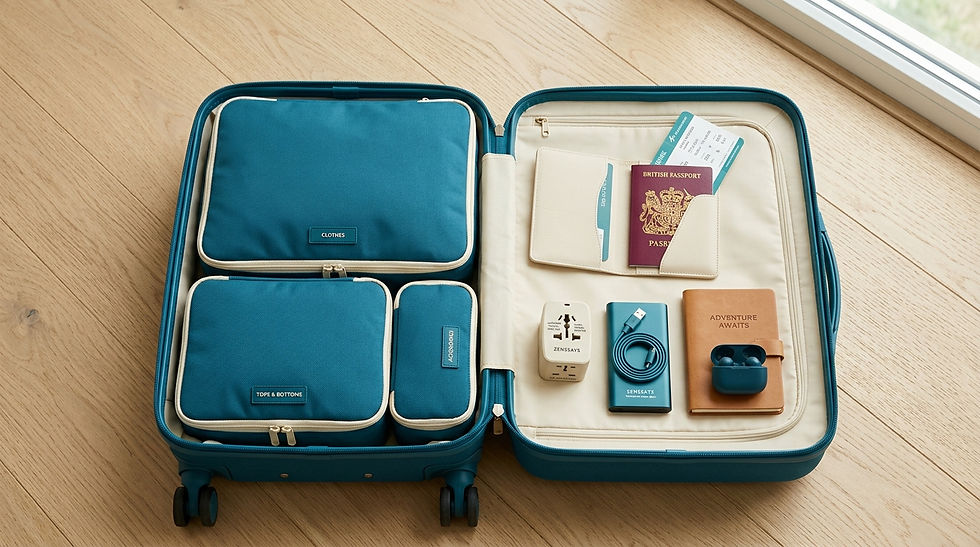
Whether you're staying for the standard 30 days or applying for a longer-stay visa, a few practical items make an extended trip noticeably smoother. A Royce Leather passport holder and travel wallet set keeps your passport, visa paperwork, and TDAC printouts organized and protected — genuinely useful when you're juggling more documents than a typical two-week vacation requires.
For the flight itself, especially if you're coming from North America or Europe, Bose QuietComfort noise-cancelling headphones and a Slip silk eye mask and pillowcase travel set make a real difference on a long-haul route, and Bombas compression socks are a small addition that helps with circulation on a 15-plus hour journey.
Once you land, an EPICKA Universal Travel Adapter and an Anker portable power bank will keep your devices charged through long immigration lines and city exploring, and a set of Eagle Creek packing cubes makes it far easier to live out of a suitcase for a month or longer without everything turning into chaos. If you're staying long enough to actually use it, a set of Learn Thai language books and CDs goes a long way with locals — even a handful of phrases changes how a longer stay feels.
For the suitcase itself, TUMI luggage and Travelpro luggage are both built for the kind of repeated handling an extended, multi-city Thailand itinerary involves.
Frequently Asked Questions About Thailand's 2026 Visa Changes
Has the 30-day rule officially taken effect yet?
Not as of this writing. The Thai Cabinet approved the change on May 19, 2026, but it takes effect 15 days after publication in the Royal Gazette, and that publication date hadn't been announced. Always verify current entry rules a few days before you fly rather than relying on this article's publish date alone.
Can I still get a 60-day stay if I book my flight now?
If the current rules are still in force when you enter Thailand, you'll receive whatever stay period is granted on arrival, and you can typically remain until that stamp expires even if the rules change while you're already in the country. This can shift quickly, though, so confirm with an official source close to your departure date.
Do I need a visa if I'm just visiting for a week or two?
No. Short trips well under the new 30-day allowance don't require any advance visa application for eligible nationalities — you'll simply need a valid passport, a completed TDAC, and proof of onward travel.
What happens if I overstay my permitted time in Thailand?
Overstaying carries a fine of 500 baht per day, up to a maximum of 20,000 baht, and longer overstays can lead to deportation, blacklisting, or multi-year entry bans depending on the length. It's always worth extending or leaving before your stamp expires rather than risking an overstay.
Is the Destination Thailand Visa the same as a digital nomad visa?
It's Thailand's version of one, yes. It's officially the DTV and is aimed at remote workers, freelancers, and people participating in approved long-term cultural or wellness programs, but it's commonly referred to as Thailand's digital nomad visa in most travel and immigration guides.
Our Take: Plan Your Visa Strategy Before You Book Flights
The 60-to-30-day change is a real shift, but it isn't something to panic over. For a standard two-to-four-week Thailand trip, it changes almost nothing. For longer stays, the smartest move is deciding on your entry strategy — exemption plus extension, a DTV, or a non-immigrant category — before you ever board a plane, rather than hoping an immigration officer sorts it out for you on arrival.
If you're weighing a longer Thailand stay against everything else on your itinerary, our Thailand travel guide is a good next stop for destination planning, and pairing it with our Thailand travel deals and packages guide can help you budget realistically once your entry plan is settled. And if a stay in Bangkok is part of the plan, the Four Seasons Hotel Chao Phraya Bangkok is one of our favorite ways to start a longer trip on the right note.
If you found this useful, consider sharing it with anyone you know who's planning a longer Thailand trip this year — visa rules like this change fast, and a heads-up before booking saves real stress later. And if you'd like Zensseys to help sort out your visa strategy alongside the rest of your itinerary, our Travel Planning & Booking service handles exactly this kind of trip.
Travel More, Discover More.




Comments