


Grab vs. Xanh SM in Vietnam: Which Ride-Hailing App Actually Wins in 2026

The green Grab jacket used to be the only uniform worth knowing in Vietnam. Now it shares the road with a wave of quiet blue-and-white electric cars and motorbikes running a different logo, and the shift happened faster than almost anyone predicted. By early 2026, that newcomer, Xanh SM, had already passed Grab in nationwide market share. This guide breaks down what actually changed, what hasn't, and which app deserves space on your phone before you land.
Grab or Xanh SM in Vietnam: Which Should You Use?
Install both. Grab remains the safer default for first-time visitors because it works instantly with a foreign phone number and international card, runs a full English interface, and covers more cities and rural routes than any competitor. Xanh SM is worth adding the moment you're staying more than a few days or spending real time in Hanoi, Ho Chi Minh City, or Da Nang, since its flat, no-surge pricing and all-electric fleet now beat Grab on comfort and, often, on cost. Neither app wins outright. The right one depends on the specific ride.
That's the quick answer. Here's why it's true, and how each app actually earns its place.
Why Xanh SM Overtook Grab in Vietnam
Xanh SM only began operating in April 2023, backed by Vingroup chairman Pham Nhat Vuong, Vietnam's richest man, and built entirely on his VinFast electric fleet. By late 2025, independent market research placed its share at roughly 40 to 51 percent of Vietnam's ride-hailing market, ahead of Grab, with Be a distant third. The company has raised its charter capital multiple times through 2026, a sign it's still funding rapid growth rather than slowing down.
Part of the pull is structural. Grab's pricing includes surge multipliers during rain and rush hour that can push fares up sharply with little warning. Xanh SM runs flat, published fares that don't move with demand, which locals and tourists alike have found far easier to budget around.
Zensseys Tip: If it's raining, or you're leaving a stadium, concert, or major event, open Xanh SM first. That's exactly when Grab's surge pricing spikes hardest, and Xanh SM's flat fare won't move.
Grab vs. Xanh SM: Quick Comparison
Grab | Xanh SM | |
Market position | Long-time leader, still #1 by brand recognition | Overtook Grab in nationwide share by late 2025 |
Vehicles | Mixed fleet, gas-powered | 100% electric VinFast fleet |
Pricing | Surge pricing during rain, rush hour, events | Flat, published fares, no surge |
Coverage | Nationwide, strongest option outside major cities | Strong in Hanoi, HCMC, Da Nang; thinner elsewhere |
Best for | First day in-country, rural routes, cheapest bike option | City stays over a few days, comfort, predictable pricing |
When Grab Still Wins
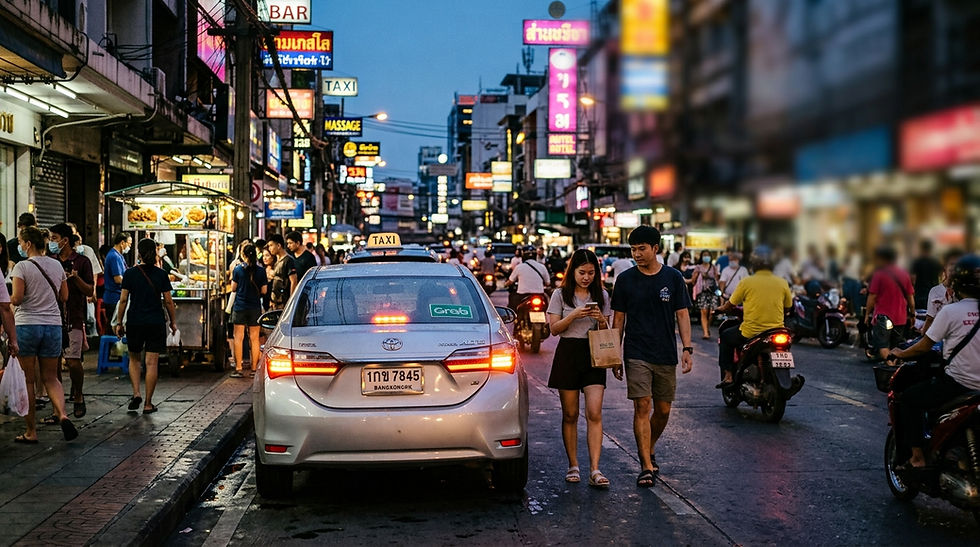
Grab has been operating in Vietnam since 2014, long enough to build the infrastructure that actually matters to a foreign visitor. It accepts international Visa and Mastercard without the linking issues some travelers report on other apps, runs a genuinely complete English interface, and reaches nationwide, from Hanoi's Old Quarter down to smaller cities Xanh SM hasn't reached yet. GrabBike, its motorbike option, is also 30 to 50 percent cheaper than a GrabCar and the fastest way through gridlock, the same dynamic that plays out in Bangkok's traffic. If you've already weighed Grab against a third player in another Southeast Asian city, the same logic applies here.
When Xanh SM Wins
Xanh SM's entire fleet is electric, which means no exhaust smell, a quieter cabin, and drivers held to service standards travelers keep comparing to a hotel rather than a taxi. Its fares hold steady even during the exact conditions that spike a Grab fare, and its cars tend to be newer simply because the fleet itself is only a few years old. The tradeoff is coverage. Xanh SM operates in a few dozen provinces rather than Grab's nationwide reach, so it's strongest in Hanoi, Ho Chi Minh City, Da Nang, and Hoi An, and noticeably thinner once you're outside the major cities.
What Real Travelers Are Finding
One traveler tracking her own rides across a multi-city Vietnam trip ended up defaulting to Xanh SM for roughly three out of every four trips, simply because it kept coming in cheaper, even though the savings on any single ride were often under a dollar. Her bigger tip for anyone sticking with Grab: scroll past the default option and select the built-in saver mode, which quietly reduces the fare without any noticeable drop in service.
Zensseys Tip: On Grab, the standard GrabCar or GrabBike option is rarely the cheapest button on the screen. Scroll down for the Tiet Kiem, or "saver," option before you book. It's the same driver pool at a lower price.
Where Be Still Fits In
Be is Vietnam's third major app, and while it hasn't taken market share the way Xanh SM has, it's worth having installed for one specific reason: motorbike rides. Be frequently undercuts Grab on GrabBike-equivalent trips, and with more registered drivers nationwide than Xanh SM currently has, it can fill the gap when the other two apps are slow to find a nearby ride.
How to Actually Set This Up Before You Land
Download Grab and Xanh SM before your flight, not after. Both need a working phone number and, ideally, a data connection the moment you clear immigration, so pairing them with an eSIM set up in advance saves the scramble at arrivals. It's also worth having travel insurance in place before any ride-hailing trip in a country with genuinely chaotic traffic, since a scooter or bike ride carries more inherent risk than a car does. Link your card to both apps before you actually need a ride, not while standing in the rain trying to get one.
None of this replaces planning the rest of the trip. If Vietnam is one stop on a longer Southeast Asia route, it's worth understanding how the new visa rules compare to Thailand's tighter 2026 changes, and if your dates land anywhere near late January or February, Tet shuts down more of the country than most itineraries account for. Still deciding between destinations entirely? The 2026 value comparison is worth a look before you commit, and if you're stringing several countries together, here's what a travel advisor actually handles on that kind of trip.
Grab isn't going anywhere in Vietnam, and neither is Xanh SM at this point. The smartest move for 2026 is treating them as complements rather than picking a side: Grab for first-day reliability and rural reach, Xanh SM for comfort and predictable pricing once you're settled into a city, and Be as the quiet backup that saves you a few dong on the shortest hops.
About the Author: William Harris is a travel advisor and the voice behind Zensseys, where he covers the practical realities of getting around, staying safe, and finding real value across Southeast Asia.







Comments