


Thailand vs. Vietnam vs. Bali in 2026: Which Destination Actually Gives You the Best Value?
Updated: Jul 26
Thailand's tourism authorities spent early 2026 sounding an unusual alarm: the baht had surged roughly 9% against the U.S. dollar in 2025, and industry groups were warning it could cost the country 15 to 17 percent of its projected tourism revenue. The reason? For the first time in years, a growing number of travelers were looking at the numbers and deciding Thailand simply wasn't the cheapest Southeast Asia option anymore. Vietnam, with a stable currency and low inflation, was pulling ahead on pure cost. Bali, meanwhile, just landed the number one spot on Rough Guides' list of Asia's best places to travel in 2026 — currency swings aside.
So which of the three actually gives you the best value in 2026? The honest answer depends less on exchange rates and more on what you're optimizing for. A backpacker chasing $1 bowls of pho and a traveler booking a wellness retreat with a private pool are solving completely different equations, even if they both call it a "good value trip." Here's how the math actually breaks down this year, country by country.

Which Is Cheaper in 2026: Thailand, Vietnam, or Bali?
Vietnam is the cheapest of the three in 2026, helped by a stable currency and low inflation, with Thailand close behind despite a stronger baht raising costs slightly. Bali costs the most day-to-day, though it delivers a specific kind of value — wellness culture, community, and curation — that the other two don't replicate at any price.
The 2026 Currency Shift Nobody Was Expecting
For most of the last decade, the pecking order was predictable: Vietnam cheapest, Thailand in the middle, Bali priciest. That order still technically holds, but the gap between Thailand and Vietnam has narrowed sharply, and it's currency movement driving the change rather than anything happening on the ground.
The Thai baht climbed roughly 9% against the U.S. dollar in 2025 and has traded near some of its strongest levels in years, even as Thailand's own inflation stayed low or negative. That combination is confusing for travelers: prices in baht haven't necessarily gone up much, but every dollar, euro, or pound converts into fewer of them, so the same guesthouse or street food meal quietly costs more in home-currency terms. Thailand's tourism authority has floated the possibility of losing well over 10% of expected tourism revenue as a result, and outbound-focused industry groups have openly said Vietnam now reads as the fresher, cheaper alternative for the same beaches and temples.
Vietnam, by contrast, enters 2026 with a currency that's been unusually stable and inflation forecast to hold near 3.5%, which means dollar-priced costs there have stayed roughly flat year over year. Bali runs on the Indonesian rupiah and carries its own fixed cost that isn't currency-dependent at all: a mandatory tourist levy of IDR 150,000 (about $10 USD) per visitor, in place since February 2024, that funds environmental and cultural preservation projects across the island.
Zensseys Tip: Because the baht has moved so much in the last year, check the exchange rate the week before you fly rather than relying on a number you remember from a previous trip. A rate that felt normal in 2024 can make Bangkok feel 10 to 15 percent pricier than it actually is once you account for how much further your currency used to stretch.
Vietnam: Still the Best Raw Value in Southeast Asia
Vietnam remains the country where a dollar goes furthest. A bowl of pho or bun cha on the street still runs $1 to $2, budget guesthouses in Hanoi, Hoi An, or Da Nang go for $8 to $15 a night, and even solid three-star hotels rarely crack $40. A full day of sightseeing, including a motorbike rental, entrance fees, and meals, can still come in under $20.
The tradeoff hasn't changed either: Vietnam asks more of independent travelers than Thailand does. Tourist infrastructure is less polished, English is spoken less consistently outside the main hubs, and getting around solo (especially by motorbike) has a steeper learning curve. You're trading some comfort for a lower price tag and a more unfiltered look at daily life.
Vietnam's 2026 Visa Update Makes This Easier Than Ever
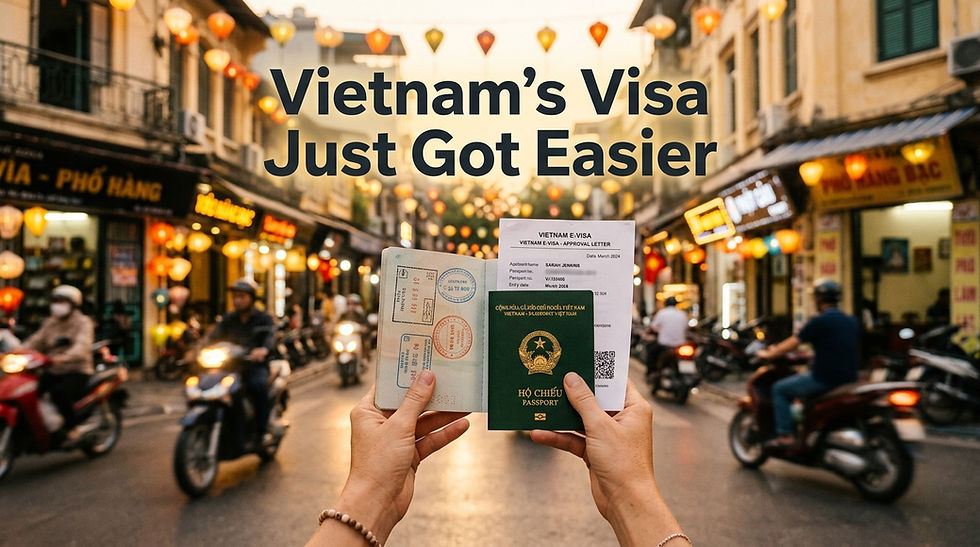
Vietnam's entry rules got noticeably friendlier heading into 2026. Citizens of roughly 38 to 39 countries, including a large block of European nations added in an August 2025 expansion, can now enter visa-free for up to 45 days. Travelers from countries not on that list, including the U.S., can apply for an e-visa valid for up to 90 days through the official government portal, with no embassy visit required. One new procedural step to plan around: Tan Son Nhat Airport in Ho Chi Minh City introduced a mandatory Digital Arrival Card in April 2026, so build a few extra minutes into your arrival timeline.
Full details are available directly through Vietnam's official e-visa portal, and our Vietnam Luxury Travel guide covers the rest of what a first trip needs.
One traveler summed up the Vietnam-versus-neighbors debate bluntly on a community travel forum: "Thailand is EXTREMELY touristy. Vietnam was perfect, especially the food." It's one traveler's opinion, not a universal verdict, but it echoes a pattern we hear often — travelers who want fewer crowds and lower prices tend to land on Vietnam first.

Thailand: Still the Best Balance, Even With a Stronger Baht
Thailand's real value proposition was never that it's the cheapest option — it's that it delivers the most for the effort you put in. Tourism infrastructure here is mature: trains, buses, and domestic flights are easy to book, English is widely spoken in tourist areas, and an enormous range of experiences is packed into one country. You can move from Bangkok's street food scene to Chiang Mai's mountains to the islands of the south without ever feeling like you're improvising.
Prices still sit a notch above Vietnam and well below Bali for comparable quality. A good guesthouse runs $15 to $25, street food and casual restaurants are $2 to $5 a meal, and even higher-end resorts in Krabi or Koh Samui often cost less than Balinese equivalents — though the stronger baht has quietly closed some of that gap over the last year.
What Changed With Thailand's Visa Rules
Thailand tightened its entry rules for 2026: the standard visa-exemption stay dropped from 60 days to 30 days for most nationalities, immigration has stepped up enforcement of repeated back-to-back visa-exempt entries, and every visitor now needs to complete the Thailand Digital Arrival Card (TDAC) before or on arrival. None of this makes Thailand harder to visit for a normal one- or two-week trip, but travelers planning longer or repeat stays should plan around it rather than assume the old rules still apply.
Our Thailand 2026 Visa Shake-Up guide breaks down exactly what changed, and Travel Consultation is the fastest way to get a straight answer for your specific itinerary.

Bali: The Most Expensive of the Three, and the Only One Selling Something Different
Bali is the priciest of the three, and it's worth being upfront about that. Ubud villas, beach clubs in Canggu, yoga retreats, and the wave of aesthetically-driven cafes have pushed prices up; a nice private villa with a pool can run $50 to $150 or more a night, and beach club days with food and drinks add up fast.
But Bali isn't selling the same thing Thailand and Vietnam are. Its value lies in a specific combination: a dense wellness and yoga infrastructure, a strong digital nomad and expat community that makes it easy to meet people and set up a temporary base, and a curated aesthetic that some travelers are explicitly paying for. Rough Guides named Bali the number one destination in Asia for 2026, citing a shift toward slower, more intentional travel over the island's more overbuilt hotspots — which lines up with what we're seeing in client requests too.
The Bali Tourist Levy, Explained
Every international visitor to Bali owes a one-time IDR 150,000 (about $10 USD) tourist levy, in place since February 2024 and payable online or at the airport. It funds environmental and cultural preservation and applies to every visitor, including children, though only an estimated 35% of eligible travelers currently pay it. A proposed increase to IDR 300,000 has been discussed but is not confirmed for 2026, so budget for the current rate and treat any higher figure as a rumor until it's official.
Pay directly through the official Love Bali portal before you fly, or budget the ten dollars to pay on arrival. Our Indonesia / Bali Travel guide and the Niskala Wellness Escape are good starting points if Bali's wellness angle is what's pulling you there.
2026 Cost Snapshot: Daily Budget by Travel Style
Daily Budget | Vietnam | Thailand | Bali |
Budget traveler | $20–$35/day | $30–$45/day | $35–$55/day |
Mid-range traveler | $45–$75/day | $60–$90/day | $75–$120/day |
Luxury traveler | $150+/day | $180+/day | $220+/day |
Entry fee | $0–$25 (e-visa) | $0 (30-day exempt) | ~$10 tourist levy |
These ranges are planning estimates based on current 2026 reporting, not guaranteed prices — always confirm current costs for your specific dates and travel style before booking.
Match the Destination to the Trip You Actually Want
• Backpacking on a strict budget, prioritizing raw affordability and comfortable roughing it a bit → Vietnam. You'll spend the least and see some of the most dramatic landscapes in Southeast Asia — Ha Long Bay, Sapa, the Mekong Delta — for a fraction of what they'd cost elsewhere.
•First trip to Southeast Asia, want variety, ease, and don't want to overthink logistics → Thailand. Islands, mountains, cities, temples, and nightlife are all accessible, well-supported, and still reasonably priced even with the stronger baht.
•Want a longer stay focused on wellness, remote work, or a built-in social scene, and don't mind paying more for the curation → Bali. You're paying for a lifestyle someone else already designed, not just scenery.
•Traveling with kids or want maximum comfort for the money → Thailand again — its resort infrastructure at mid-range price points is hard to beat, and family-friendly amenities are everywhere.
•Chasing untouched, less-commercialized experiences and don't mind more friction → Vietnam, particularly the north and center, away from the main tourist trail.
Zensseys Tip: If you can't choose, don't. Bangkok to Bali is roughly a 5- to 6-hour direct flight for $80–$150, which makes a two-country trip genuinely viable — spend the first half in Thailand for ease and variety, then close the trip in Bali for the wellness reset. Our Travel Planning & Booking service can sequence this so you don't waste vacation days in transit.

A Note on Timing and Trip Length
Value shifts with how long you're staying and when you go. A short one- to two-week trip favors Thailand's efficient infrastructure, since you won't waste days figuring out logistics. A longer, month-plus stay tips the math toward Vietnam or Bali, since monthly accommodation rates drop significantly in both, especially outside peak season (roughly December through March across all three). Shoulder season — May-June or September-October — can meaningfully lower Bali costs especially, narrowing the price gap with Thailand.
For long-haul comfort on any of these routes, a decent pair of noise-isolating headphones and a compression sock set make the flight itself less of a tax on the trip; both are worth the small upfront cost given how long the flights from North America or Europe run.
Frequently Asked Questions
Is Vietnam actually cheaper than Thailand in 2026?
Yes, on raw daily cost Vietnam remains cheaper, and the gap has widened slightly because the Thai baht strengthened roughly 9% in 2025 while the Vietnamese dong stayed stable. Thailand still offers better tourism infrastructure and variety for the money.
Do I need a visa for Bali?
Indonesia offers visa-on-arrival for many nationalities, separate from the mandatory IDR 150,000 tourist levy every international visitor pays regardless of visa type. Check current Indonesian entry requirements for your passport before booking.
Which destination is best for a first-time Southeast Asia trip?
Thailand is generally the easiest first trip thanks to its mature tourism infrastructure, wide English use in tourist areas, and variety packed into one country. Bali is a close second for travelers who want a single, contained island rather than multi-city logistics.
Can I visit all three countries in one trip?
Yes — Thailand and Vietnam share direct regional flights, and Bangkok to Bali is a direct 5- to 6-hour flight. A two-to-three-week trip covering two of the three is realistic; fitting all three comfortably usually needs three-plus weeks.
The Bottom Line
There's no single "best value" winner in 2026, because value was never just about cost — it's cost relative to what you actually want out of the trip. Vietnam wins if your priority is stretching every dollar as far as it goes, and this year that gap over Thailand is a little wider than usual. Thailand still wins on the best ratio of comfort, ease, and variety to price, baht strength notwithstanding. Bali wins if you're after a specific lifestyle experience — wellness, community, aesthetics — and you're willing to pay more for a place that's already built that experience for you.
The smartest move isn't picking the "cheapest" country — it's picking the one where your money buys the trip you actually want. If you'd like a second opinion built around your specific budget and dates, a Travel Consultation with Zensseys can map that out, or browse current Curated Travel Deals across all three destinations.
Travel More, Discover More.
See this comparison broken down visually in our companion video:





Comments