

Why Thai Hospitals Won't Just Take Your Insurance Card at the Door (And What Actually Gets You Treated)

The Short Answer
Having travel insurance and being treated without paying upfront are not the same thing in Thailand. Thai private hospitals don't authorize treatment based on your policy documents — they authorize it based on a Letter of Guarantee, a formal confirmation your insurer sends directly to the hospital that it will cover the bill. Until that letter arrives, or unless your specific insurer has a pre-existing direct-billing agreement with that specific hospital, you're treated as a self-pay patient and asked for a deposit, regardless of what your policy promises on paper. Most travelers only discover this distinction while standing at the admissions desk.
Why "I Have Insurance" Isn't the Same as "I'm Covered Right Now"
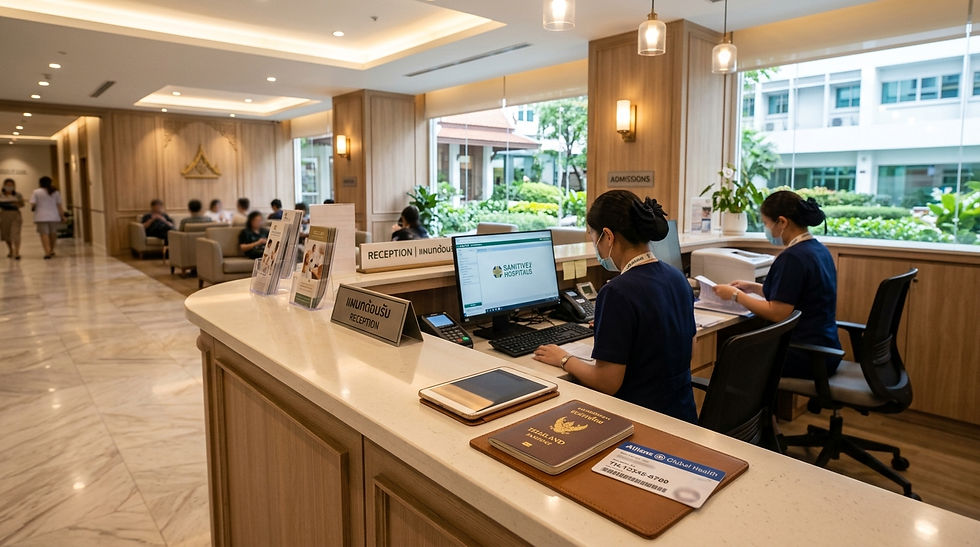
A patient with legitimate private health insurance is admitted to a hospital in Bangkok, and the hospital still asks for a deposit before treatment begins. That's not a clerical error — it's how the system is built. Thai private hospitals don't take your word, or even your insurance card, as proof of coverage. They need either an active direct-billing relationship with your specific insurer, confirmed in advance, or a Letter of Guarantee issued for that specific visit. Bumrungrad International — one of the most internationally recognized hospitals in Bangkok — states plainly that self-pay patients and patients insured by non-contracted carriers must provide a deposit covering the hospital's full price estimate before treatment starts, and if the letter of guarantee doesn't arrive by the discharge date, the patient is responsible for the full amount and must file for reimbursement directly.
Zensseys Tip: Before you ever need it, call your insurer's 24-hour assistance line and ask two direct questions: does this specific hospital have a direct-billing agreement with you, and how do I request a Letter of Guarantee. Do this from your hotel room on day one, not from a gurney.
What Happens If You Don't Have Direct Billing
Without a confirmed direct-billing arrangement, Thai private hospitals typically require a deposit of 50,000 to 200,000 baht (roughly $1,400–$5,700 USD) for planned procedures, and up to 800,000 baht for major surgery — a figure that applies whether or not you technically have insurance. You then pay out of pocket, submit your paperwork, and wait for reimbursement, which industry-wide runs two to four weeks for digital claims and up to 45 days for paper ones. Initial claim denial rates across the insurance industry sit around 15 to 20 percent, most often over paperwork issues rather than genuine medical disputes. All of this happens while you're also trying to recover from whatever put you in the hospital in the first place.
The Real Story That Shows What's at Stake
In one widely reported case, a British backpacker broke her neck diving into a shallow pool in Pai and was rushed to Chiangmai Ram Hospital — but the private facility refused to operate until her family guaranteed the cost, because her insurer had declined the claim, citing "reckless behavior" in the policy's fine print. Her family had to launch a public fundraiser to cover a medical flight home. The lesson isn't that insurance failed her outright — it's that a policy exclusion put her in exactly the same position as someone with no insurance at all: needing to prove she could pay before a hospital would treat her. Direct billing and a clean, exclusion-free policy are what actually close that gap, not just having a policy number.
Zensseys Tip: Read your policy's activity exclusions before you book anything adventurous — scooters, diving, cliff jumping, Muay Thai sparring. A cheap policy that excludes the exact thing you're most likely to do in Thailand isn't really covering your trip.
Which Hospitals and Insurers Actually Make This Easy
The major Thai private hospital networks — Bumrungrad, the BDMS group (which includes Bangkok Hospital), MedPark, BNH, and Samitivej — all maintain direct-billing relationships with major international insurers, and this is genuinely one of the more useful things to confirm before you buy a policy rather than after. Public hospitals almost never offer direct billing to foreign travelers. If your trip involves the Destination Thailand Visa or another long-stay Thailand visa, confirming direct billing at the hospital nearest to where you'll actually be living matters even more than the headline coverage number on your policy.
Small Prep, Fewer Claims
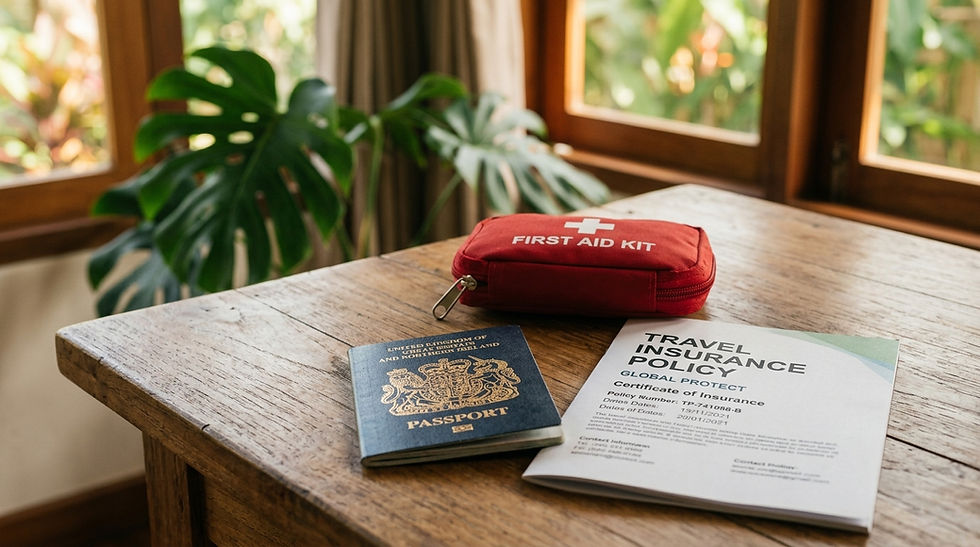
A little prevention goes a long way toward never needing this article's advice at all. A compact travel first aid/health kit handles minor cuts, scrapes, and stomach issues that don't need a hospital trip, and if scooters are anywhere in your plans, a real Panama hat and proper sun protection sound trivial until heat exhaustion becomes the reason you're testing your insurance in the first place.
The Verdict
Wherever your Thailand itinerary takes you, having this sorted before departure is worth the twenty minutes it takes.
Carrying travel insurance to Thailand is non-negotiable, but the number on your policy's coverage limit isn't the thing that determines whether you pay upfront in a crisis — the direct-billing relationship between your specific insurer and the specific hospital you end up at is. Before you travel, confirm that relationship exists, know how to reach your insurer's emergency line, and read your exclusions for exactly the activities you're most likely to do. If you're planning a longer Thailand stay and want help thinking through which visa and insurance combination actually fits your situation, a Zensseys Travel Consultation is worth the conversation before you commit to anything.
Frequently Asked Questions
If I have travel insurance, will a Thai hospital treat me without payment upfront?
Only if that specific hospital has a direct-billing agreement with your specific insurer, or your insurer issues a Letter of Guarantee for that visit. Without either, you're treated as a self-pay patient and asked for a deposit regardless of your policy.
How much deposit do Thai private hospitals typically require?
Generally 50,000 to 200,000 baht for planned procedures, and up to 800,000 baht for major surgery — figures that apply whether or not you have insurance, unless direct billing is confirmed.
How do I know if my hospital has direct billing with my insurer?
Call your insurer's 24-hour assistance line before you need it and ask directly. Major networks like Bumrungrad, BDMS/Bangkok Hospital, MedPark, BNH, and Samitivej maintain these relationships with major international insurers, but it varies by specific carrier.
What if my insurance claim gets denied at the hospital?
You become responsible for the full bill as a self-pay patient. This is exactly what happened to a British backpacker whose insurer cited a "reckless behavior" exclusion after a pool-diving accident — always read your policy's activity exclusions before your trip.
Do public Thai hospitals also require upfront payment from foreigners?
Public hospitals almost never offer direct billing to foreign travelers, though costs are generally lower than private hospitals. Foreigners are also charged at a higher rate than Thai citizens under Thailand's tiered pricing system, even at public facilities.
This article was written by William Harris, founder and lead travel advisor at Zensseys, a luxury travel advisory specializing in Thailand, Vietnam, and Indonesia. William helps travelers understand not just whether they have insurance, but whether it will actually work the way they expect when it matters.





Comments